Grandma’s Kitchen: Learning Arabic Through Food and Family
The tastiest way to connect kids to their mother tongue this summer.
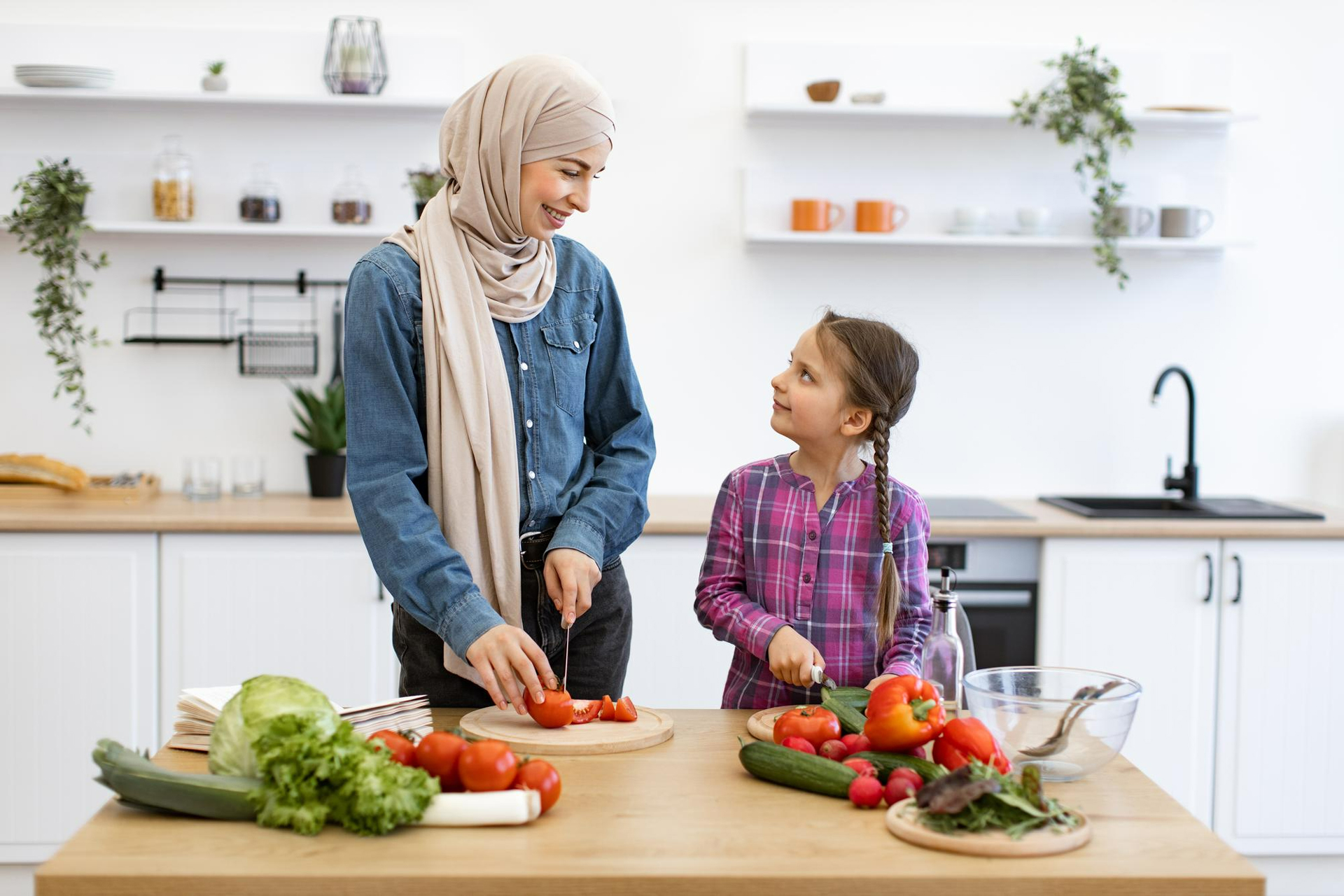
There is a smell that many of us carry with us long after childhood ends. The scent of garlic and onions softening in oil, the warmth of fresh bread pulled from the oven, the sweetness of rosewater drifting through a kitchen during a holiday visit. For countless families, these smells are inseparable from the sound of a grandmother’s voice, calling out instructions in Arabic, naming ingredients, and telling stories while her hands move confidently through a recipe she has made a thousand times before. This summer, we want to explore one of the most joyful and often overlooked pathways to learning the Arabic language for children, the kitchen itself, and the irreplaceable role that food and family play in keeping the mother tongue alive.
Teaching the Arabic language does not always need to happen at a desk with a workbook open. Some of the richest, most memorable language learning happens standing on a stool next to a grandmother, hands dusted with flour, listening to words that describe not just cooking techniques but entire traditions, values, and family histories passed down through generations. At Kalima, we believe that these moments deserve just as much recognition and intention as formal lessons because they build something formal instruction alone cannot always achieve: a deep emotional bond between a child and their heritage.
This idea sits at the very heart of what Kalima was built on. With more than nine years of experience teaching Arabic in creative and interactive ways, we have long recognized that some of the deepest learning happens far outside a formal classroom setting, in the ordinary, unscripted moments of daily life. The kitchen, with its warmth, its patience, and its built in rhythm of repetition, turns out to be one of the most natural classrooms a family could ask for.
Why Food Is Such a Powerful Language Teacher
Cooking offers a uniquely multisensory learning environment that few other activities can match. Children are not simply hearing words in isolation; they are seeing, smelling, touching, and eventually tasting the very things being named. This kind of embodied learning creates exceptionally strong memory associations, far stronger than vocabulary encountered purely through reading or listening alone. A child who helps knead dough while hearing the word for dough repeated by a grandmother is far more likely to remember that word than one who simply memorized it from a flashcard.
Cooking together also naturally slows down the pace of language exposure in a way that feels organic rather than instructional. Recipes unfold step by step, giving children repeated opportunities to hear the same vocabulary used in context, whether it is naming ingredients, describing textures, or following simple sequential instructions like first, then, and finally. This built-in repetition mirrors exactly the kind of spaced, contextual learning that language acquisition experts recognize as most effective for long-term retention.
Perhaps most importantly, cooking with family members, particularly grandparents, ties language learning to genuine emotional connection. Children are far more motivated to understand and use words that matter to people they love in moments that feel meaningful rather than academic. A recipe passed down through three generations carries weight and significance that no manufactured classroom exercise can replicate, and that emotional resonance often becomes the very thing that keeps a child’s connection to Arabic alive well into adulthood.
This is not to suggest that formal lessons are unnecessary. Rather, the two approaches work best together, each reinforcing the other in ways that make Arabic feel like a living, breathing part of a child’s world rather than an isolated subject confined to a screen or a workbook.
Everyday Kitchen Vocabulary Worth Introducing
Summer is a wonderful time to begin weaving Arabic vocabulary naturally into time spent in the kitchen, even for families where cooking together is a relatively new tradition. Simple, high-frequency words related to ingredients, such as the names of common fruits, vegetables, spices, and staples like rice, bread, and oil, offer an accessible starting point that children can quickly begin to recognize and use.
Beyond ingredients, action words used throughout the cooking process, such as mixing, chopping, pouring, and baking, provide rich opportunities for children to connect verbs to physical actions they are performing themselves, which tends to accelerate retention significantly. Descriptive words, including terms for hot, cold, sweet, sour, and spicy, add another valuable layer, especially once children reach the exciting moment of tasting what they have helped prepare.
Numbers and measurements offer a particularly practical and engaging vocabulary set as well, since recipes naturally require counting cups, spoons, or pieces of an ingredient, giving children functional, repeated practice with numbers in a context that feels purposeful rather than abstract. Over the course of a single recipe, a child can encounter dozens of meaningful vocabulary words, all reinforced through direct, tactile experience.
Recipes and Traditions Worth Passing Down This Summer
Every family carries its own culinary traditions, and summer is an especially fitting season to revisit and share them, given the more relaxed pace that often allows for longer, unhurried time in the kitchen. Simple recipes that involve several hands-on steps tend to work particularly well for engaging children, since they offer multiple opportunities for involvement rather than a single, brief task.
Dishes that are traditionally prepared as a family activity rather than a solitary task, such as rolling grape leaves, shaping small pastries, or preparing dough for bread, are ideal candidates for this kind of language-rich cooking experience. These recipes often involve repetitive physical actions that children can master quickly, freeing up mental space to focus on absorbing the vocabulary and conversation happening around them rather than struggling with an unfamiliar or overly complex task.
Sweet recipes in particular tend to hold strong appeal for children, given the built-in motivation of an enjoyable reward at the end of the process. Simple desserts or snacks that a grandmother or parent traditionally prepares for celebrations or gatherings offer a wonderful opportunity to connect a specific recipe to a broader cultural or family occasion, deepening a child’s understanding of not just the language but the traditions surrounding it.
Involving Grandparents as Language Partners
Grandparents often hold a uniquely powerful position when it comes to passing down Arabic to younger generations, not only because many are fluent native speakers, but because of the emotional weight and authority their voice carries for a child. Encouraging regular cooking sessions with grandparents, whether in person during a summer visit or through video calls where a recipe is prepared together at a distance, creates consistent, meaningful opportunities for exposure to Arabic that feel completely natural rather than staged.
For families who do not live near grandparents, technology can help bridge that gap in creative ways. A video call where a grandmother walks a grandchild through her favorite recipe step by step, narrating in Arabic while the child prepares the same dish in their own kitchen, recreates much of the warmth and connection of an in-person cooking lesson, while also providing an excellent, low-pressure form of language practice.
It can also help to gently encourage grandparents to narrate what they are doing as they cook, even if this does not come naturally to everyone. Some grandparents may need a little encouragement or a few suggested phrases to fall into this kind of narration, particularly if they are used to cooking quietly on their own. Framing this as an opportunity to share family history and tradition, rather than as a formal language lesson, often makes grandparents more enthusiastic about taking on this role.
Turning Kitchen Time Into Storytelling Time
Cooking together naturally opens the door to storytelling, since so many family recipes carry histories worth telling. A grandmother preparing a dish she learned from her own mother often has memories attached to it, stories about where the recipe came from, what occasions it was traditionally served for, or funny memories of past attempts that did not go quite as planned. Encouraging these stories, even briefly, adds another rich layer of Arabic language exposure that goes beyond simple vocabulary and into more complex, narrative structures.
Children who hear these stories repeatedly, whether about a recipe, a family celebration, or a childhood memory, begin to absorb more sophisticated sentence patterns and vocabulary than they might encounter in a typical vocabulary-focused lesson. This kind of storytelling also reinforces a child’s sense of identity and belonging, helping them understand that Arabic is not simply a subject to study but the very language in which their family’s history has been told for generations.
Bringing Structure to a Naturally Joyful Activity
While the informal, joyful nature of cooking together is exactly what makes it such an effective learning tool, pairing these kitchen experiences with more structured online Arabic lessons for kids can help ensure that vocabulary learned in the kitchen is reinforced, expanded, and connected to broader language skills like reading and writing. At Kalima, our teachers often enjoy hearing about what families have been cooking together, and we love incorporating food-related vocabulary and cultural themes into our one-on-one lessons whenever it aligns with a student’s interests.
This connection between home and formal instruction helps children see Arabic as a single, cohesive part of their life rather than two separate experiences, one joyful and one academic. A child who learns the word for “cinnamon” while helping a grandmother bake and then later encounters that same word in a story or writing exercise during their Kalima lesson, experiences the kind of meaningful repetition that builds truly lasting language skills.
Making Room for Mistakes and Mess in the Kitchen
Parents sometimes hesitate to invite children into meaningful kitchen tasks, worrying about spills, mistakes, or the extra time it takes to let a child measure, stir, or knead at their own pace. It is worth remembering that some of the messiness of cooking with children is exactly what makes the experience so valuable from a learning perspective. A spilled cup of flour or an unevenly rolled piece of dough is rarely a real problem, and the patience required to work through these small mishaps together often becomes part of the shared story a family tells for years afterward.
Allowing children to make genuine mistakes in the kitchen, rather than only observing from a safe distance, gives them ownership over the process and increases their emotional investment in both the recipe and the language surrounding it. A child who accidentally adds too much salt and helps figure out how to fix it is likely to remember the Arabic word for salt far more vividly than one who only watched an adult measure it out precisely. Embracing this kind of imperfect, hands-on involvement is central to why kitchen-based learning tends to be so effective and so memorable.
Extending the Tradition Beyond a Single Recipe
While a single afternoon spent baking or cooking together can be a wonderful experience on its own, the real language benefits tend to compound when kitchen time becomes a recurring tradition rather than an occasional event. Establishing a regular rhythm, whether it is a weekly baking session, a monthly family recipe day, or a standing video call with a grandparent to prepare a dish together, provides the kind of consistent, repeated exposure that supports genuine language retention over time.
Documenting this tradition can add another meaningful layer as well. Keeping a simple family recipe book where children help write down ingredients and steps in Arabic, even with imperfect spelling or simple phrases, creates a tangible keepsake that combines writing practice with a cherished family tradition. Over the years, this kind of recipe book can become a treasured record not just of favorite family dishes, but of a child’s growing relationship with their mother tongue, one page and one recipe at a time.
Celebrations, Holidays, and Special Occasion Cooking
Beyond everyday meals, special occasions and holidays offer some of the richest opportunities for cooking-based language learning, since they often involve dishes prepared only a few times a year, each carrying its own specific vocabulary and traditions. A child who helps prepare a special dish for a holiday gathering is not just learning the names of ingredients, they are learning the vocabulary of celebration itself, words related to guests, blessings, gratitude, and togetherness that rarely come up during an ordinary weekday meal.
These occasions also tend to involve extended family, providing children with a wider range of Arabic speakers to listen to and interact with, each bringing their own accent, expressions, and personal stories. A summer visit that includes helping prepare a large family meal for a gathering of aunts, uncles, and cousins can expose a child to an entire afternoon of rich, varied Arabic conversation, far more than a single, isolated lesson could ever provide. Encouraging children to ask questions during these occasions, whether about an unfamiliar ingredient or the significance of a particular dish, helps them engage actively rather than passively during these valuable moments of exposure.
A Tradition Worth Continuing All Summer Long
As summer unfolds and families find themselves with a little more time for slow mornings and shared afternoons in the kitchen, we encourage you to see cooking together not just as a way to prepare a meal, but as a genuine opportunity to strengthen your child’s relationship with Arabic and with their family’s heritage. Whether it is a simple weekly tradition of baking something sweet together or an ambitious family recipe passed down through several generations, these moments carry a kind of teaching power that no classroom alone can fully replicate.
With more than nine years of experience teaching Arabic language to children in creative, engaging ways, Kalima understands that the most meaningful learning often happens outside of a traditional lesson format, in moments filled with laughter, flour-covered hands, and the comforting presence of family. We are always here to complement these home-based experiences with personalized, one-on-one online Arabic lessons that build on everything your child is already absorbing at home.
Years from now, your child may not remember every vocabulary list or every grammar rule practiced during a formal lesson, but there is a very good chance they will remember the smell of a particular dish, the sound of a grandmother’s laughter as she corrected their pronunciation of an ingredient, or the pride of finally rolling a perfect grape leaf on their own. These are the memories that keep a mother tongue alive across generations, woven not into textbooks but into the everyday rhythms of family life. A kitchen filled with warmth, patience, and a shared love of good food may just be one of the most powerful classrooms a child ever steps into. If you would like to explore how Kalima can help your child deepen their connection to Arabic this summer, both in the kitchen and beyond, reach out to us. Our team would love to help your family weave language, food, and tradition together into a summer your child will remember fondly for years to come.
Contact us on 📞 +961 81 701 455 📧 info@kalima-lessons.com
Recommended Read: Kalima’s Summer Reading Corner: The best Arabic storybooks to read together before bed this summer.