Beyond the Spectrum: How Kalima’s Mission Supports Children with Autism
The journey of parenting a child with autism is one of profound discovery, unique challenges, and a constant search for tools that resonate with a neurodivergent mind. When it comes to education, specifically language acquisition, many parents find themselves at a crossroads. There is a persistent belief that for a child on the spectrum, learning a second language—especially one as linguistically tough and rigid as Arabic—might be an unnecessary burden or a source of overwhelming sensory frustration.
At Kalima, our mission is to dismantle this misconception. We believe that every child has a right to their mother language and that the Arabic Language, when approached with empathy and creativity, can actually offer a therapeutic and grounding experience for children with autism. Our philosophy is not just about teaching a subject; it is about creating a bridge of communication that is happy and fun. By moving away from traditional, high-pressure environments and toward a creative, interesting, and fun approach, we help children on the spectrum unlock a world of expression that was once thought to be out of reach.
The Beauty of Predictable Structure in a Chaotic World
Children with Autism Spectrum Disorder (ASD) often navigate a world that feels unpredictable and sensory-heavy. In such an environment, consistency is more than a habit; it is a sanctuary. Arabic, while often called tough, is actually a language of incredible mathematical logic and structural rhythm. This inherent logic can be deeply appealing to the systemizing nature often found in autistic learners.
At Kalima, we capitalize on this by providing a consistent, rhythmic structure to our lessons. We don’t just dive into grammar; we create a rhythm of learning. Whether it is a 15-minute daily home routine or our tailored One-on-one online classes, the child knows exactly what to expect. This predictability reduces the cognitive load and lowers anxiety, creating a mental state where the child is attentive to the words because they feel safe.
The structured nature of Arabic morphology is particularly beneficial. Most Arabic words are derived from a three-letter root system. For an autistic child who excels at pattern recognition, this isn’t just a linguistic rule; it is a comforting logic. When they see the root “K-T-B” and learn that it relates to writing, and then see it appear in words for book, desk, and library, they feel a sense of mastery over a predictable system.
A Multi-Sensory Approach to Connection
One of the cornerstones of Kalima’s mission is the use of diverse teaching tools. We understand that for an autistic child, a textbook is often a barrier. To truly learn Arabic for kids on the spectrum, we must engage the senses in a way that feels like play rather than work.
Visual Engagement and Arabic Reading
Arabic script is inherently artistic. For a visual learner, the letters are not just symbols; they are shapes. We use drawing as a primary tool. By turning the letter Noon into a bowl or Jeem into a person with a belly, we provide a visual anchor that helps the child categorize and remember. This turns Arabic Reading into an intriguing visual puzzle.
In our digital platform, we use high-contrast visuals and clean layouts to avoid overstimulation. We know that many children on the spectrum are sensitive to visual clutter. By focusing on one letter or one word at a time, we allow the child to focus deeply without the distraction of a crowded page.
Auditory Rhythm and Attentive Listening
Music and song are universal languages. At Kalima, we use singing and dancing to introduce the phonetic sounds of Arabic. The melodic nature of the language allows children to absorb sounds without the pressure of direct eye contact or social performance. This Attentive Listening helps in developing language habits in a way that feels organic and non-threatening.
Phonetics can be a challenge for some children with ASD, but the repetitive nature of Arabic nursery rhymes provides a safe space for vocal exploration. We celebrate every sound produced, creating a positive feedback loop that builds vocal confidence.
Kinesthetic Learning and Playing Games
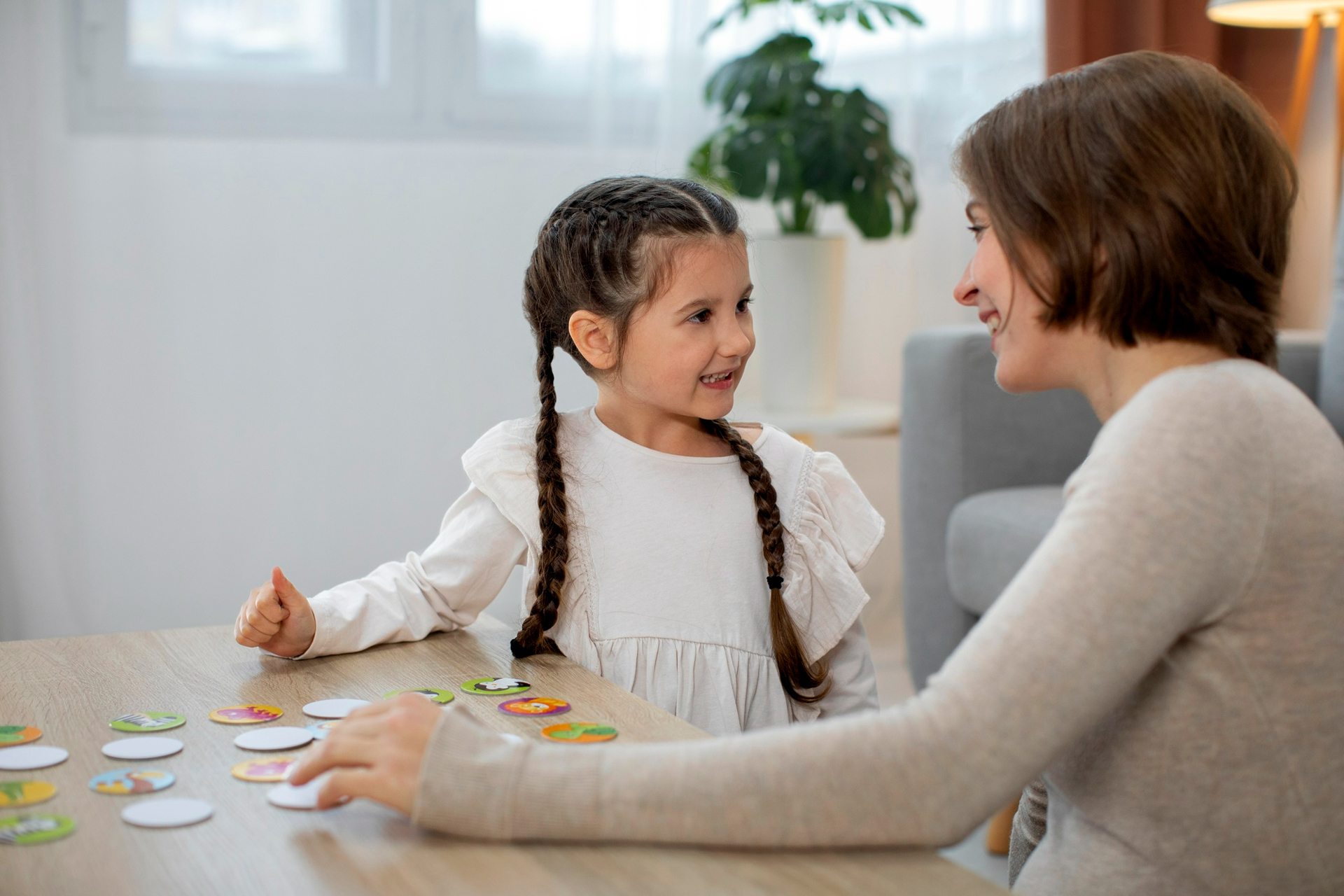
Many children with autism process information better when their bodies are in motion. We incorporate playing games and puppet shows into our curriculum. A puppet can act as a social bridge, allowing the child to practice the Arabic Language with a character rather than a person, which can often be less intimidating.
Whether it’s jumping to a specific letter drawn on the floor or acting out a story with hand gestures, the physical involvement helps cement the linguistic concepts. It moves the learning from the screen and into the real world.
Tailoring the Experience: One-on-One Support
The Spectrum in Autism Spectrum Disorder means that no two children are the same. A classroom setting often fails to account for sensory sensitivities—perhaps the lights are too bright, or the noise of other children is too much.
Kalima’s One-on-one online Arabic classes are specifically designed to be tailored and chosen upon every student’s need. Our instructors, with over 9 years of experience, are trained to read the subtle cues of their students.
Personalized Pace
Some children need to move fast to stay engaged, while others need long pauses to process information. In a one-on-one setting, we have the luxury of time. We never rush. We wait for the child to lead, and we follow their pace. This eliminates the frustration of “falling behind” and replaces it with the joy of discovery.
Hyper-Focus as a Superpower
Many autistic children have intense interests—what we call hyper-focus. If a child is fascinated by space, we learn the names of the planets in Arabic. If they love cats, our entire lesson plan becomes centered around felines. By weaving their passions into the Arabic Language, we make the lessons inherently rewarding.
Moving from Rigid to Radiant
Arabic has a reputation for being a tough and rigid language, but that is a perspective born of traditional teaching methods. At Kalima, we see the language as radiant and flexible. For a child with autism, the rigid rules of root-based word construction can actually be a source of comfort. The way words grow from a three-letter root is logical and predictable.
By using a fun and interactive way to teach these roots, we give the child a sense of mastery. They begin to see the patterns in the language. This sense of mastery is a powerful boost to their self-esteem. They aren’t just learning a language; they are proving to themselves that they can navigate a complex system and find the fun within it.
The Cognitive Benefits of Bilingualism for ASD
Research increasingly shows that bilingualism can enhance cognitive flexibility in children with autism. Learning a second language requires the brain to switch between different systems of rules, which can improve “executive function”—the mental skills that help us plan, focus, and multitask.
For a child with autism, the Arabic Language offers a unique cognitive exercise. The different syntax and right-to-left reading direction challenge the brain in a healthy way. When we keep it interesting to read and play, we are essentially giving the brain a workout that improves overall mental agility.
The Emotional Value of the Mother Language
For many families, Arabic is the mother language—the language of heritage, family gatherings, and ancestral stories. When a child with autism is excluded from learning this language because it is deemed too hard, a gap is created between the child and their cultural identity.
Our mission is to close that gap. We believe that being able to say Marhaba to a grandparent or understand a traditional song is a vital part of a child’s emotional development. By making the process the most happy and fun way, we ensure that the child associates their heritage language with joy and connection, rather than frustration and failure.
Support for the Whole Family
We understand that parents of children on the spectrum are often balancing many different therapies and educational demands. Our WhatsApp Support and flexible online platform are designed to be as low-stress as possible for the parents. We are partners in your child’s development.
The Power of Consistency that we advocate for is not just for the child, but for the family unit. A 15-minute daily Arabic routine can become a special connection time for a parent and child—a time where the focus isn’t on therapy, but on playing games, puppet shows, and creating stories.
Creating a Sensory-Safe Home Routine
We help parents set up their learning space. We advise on:
- Lighting: Using soft, natural light to reduce glare.
- Sound: Using headphones if the child is sensitive to background noise.
- Seating: Allowing for movement-based seating like exercise balls or fidget cushions.
- Materials: Keeping Arabic Reading materials within reach but organized to avoid clutter.
Technology as a Bridge
Online Arabic lessons for kids have revolutionized how we reach neurodivergent learners. Technology allows for a level of control that a physical classroom cannot match. At Kalima, we use interactive tools that provide immediate, positive reinforcement.
For an autistic child, the instant “ping” of a correct answer or a colorful animation when they finish a task provides a dopamine hit that encourages them to keep going. It’s a gamified experience that feels like their favorite app, but it is teaching them the Arabic Language, Arabic Reading, and Arabic Writing.
Case Study: The Power of Play
Imagine a child who refuses to speak in social settings. In a traditional Arabic lesson, they might shut down completely. However, during a Kalima session, the teacher introduces a puppet named “Zaki.” Zaki only understands Arabic. The teacher uses Zaki to play “Hide and Seek” with Arabic vocabulary.
Slowly, the child begins to whisper words to Zaki. There is no pressure from a human adult; there is only a fun interaction with a puppet. Over time, that whisper becomes a confident voice. This is the transformation we see at Kalima. This is why our passion of teaching Arabic is so central to everything we do.
Addressing the “Rigid” Label
We often hear that Arabic is too tough for children with communication delays. But communication is not just about words; it’s about connection. If a child can connect with a song, a drawing, or a game, they can learn the language.
Our 9 years of experience have shown us that the “rigidity” of Arabic is actually its greatest strength for neurodivergent minds. It is a language of logic. It is a language of patterns. And for a mind that sees patterns where others see chaos, Arabic is a perfect fit.
A Global Community for Every Child
Kalima’s online Arabic lessons for kids reach children all over the world. This means that an autistic child in London can connect with their heritage in a way that feels modern and accessible. We are building a global community where being different is celebrated, and where the mother language is a gift, not a chore.
Final Thoughts: The Kalima Promise
We promise an environment where your child can enjoy knowing more about this intriguing yet interesting language. We promise a teacher who is patient, a curriculum that is fun, and a mission that prioritizes your child’s unique way of learning.
The Arabic Language belongs to every child. It is a language of poetry, science, and history. It is a language of the heart. By fostering this connection through our One-on-one online Arabic classes, we are helping children on the spectrum find their voice in their mother language.
Let us start this journey together. Let us move away from the tough and toward the radiant. Let us transform 15 minutes a day into a lifetime of cultural connection and cognitive growth.
At Kalima, the best way to learn Arabic is to be attentive to the words and to have fun; our One-on-one online Arabic classes are tailored and chosen upon every student’s need. With us, your child gets to take Arabic courses in the most happy and fun way, where he/she enjoys knowing more about this intriguing yet interesting language. The three main courses we focus on to learn Arabic are the Arabic Language itself, Arabic Reading, and Arabic Writing.
info@kalima-lessons.com
Recommended Reads: Bilingual Milestones: What to Expect in the First 6 Months