How Eid Traditions Help Children Connect With the Arabic Language
Eid is one of the most joyful and meaningful celebrations in the Arab and Muslim world. For children, it is often associated with happiness, gifts, delicious food, colorful clothes, family gatherings, and exciting traditions. Yet beyond the celebration itself, Eid also offers something deeply valuable for language development. It creates a rich environment where children naturally hear, practice, and emotionally connect with Arabic in everyday situations.
For parents searching for effective ways to learn arabic language for children, Eid can become a powerful educational opportunity. During the celebration, Arabic moves beyond textbooks and becomes part of real life. Children hear greetings, stories, prayers, songs, jokes, and conversations repeated throughout the day. They begin understanding that Arabic is not simply a subject to study, but a living language connected to identity, culture, family, and belonging.
Many parents today struggle with maintaining Arabic fluency for children growing up in multilingual environments. Some children understand Arabic but feel shy speaking it. Others prefer responding in English or another dominant language. In many homes, parents worry that their children are slowly losing connection with their mother tongue. This concern is increasingly common, especially among families living abroad or children attending international schools.
This is why celebrations like Eid are so important. They provide natural and emotionally meaningful exposure to Arabic. Research in child language development consistently shows that children learn languages more effectively when learning is associated with positive emotions, repetition, social interaction, and real-world context. Eid naturally combines all of these elements.
From the moment Eid preparations begin, children are surrounded by opportunities to hear and use Arabic. They listen to parents discussing preparations, hear traditional Eid greetings repeated by relatives, participate in cultural activities, and engage in conversations filled with emotion and excitement. These moments help children absorb vocabulary, improve listening skills, strengthen pronunciation, and increase confidence in speaking Arabic.
For families interested in Arabic lessons online, combining structured learning with cultural experiences like Eid can significantly improve motivation and retention. Children are more likely to engage with a language when they see its value in real-life situations.
Why Emotional Connection Matters in Language Learning
One of the strongest factors in children’s language acquisition is emotional association. Children remember words more easily when they are connected to experiences, feelings, or meaningful memories. This is why they often remember songs, jokes, and stories far more easily than vocabulary lists.
During Eid, Arabic becomes naturally linked with happiness, warmth, family love, excitement, generosity, and celebration. This emotional connection strengthens how deeply the language is stored in memory.
When a child hears “Eid Mubarak” while hugging relatives or receiving gifts, the language becomes alive and meaningful. These emotional moments help vocabulary stay in long-term memory because the brain stores emotionally rich experiences more strongly.
Children also feel more motivated to speak when language helps them connect with others. A child who greets grandparents or cousins in Arabic and receives a positive response feels proud and encouraged. These small interactions build confidence and reinforce continued use of the language.
In contrast, one common challenge in teaching the Arabic language is when children associate Arabic only with homework, correction, or pressure. Eid helps break this pattern by making Arabic feel joyful, natural, and emotionally rewarding.
Family Gatherings Create a Natural Arabic Learning Environment
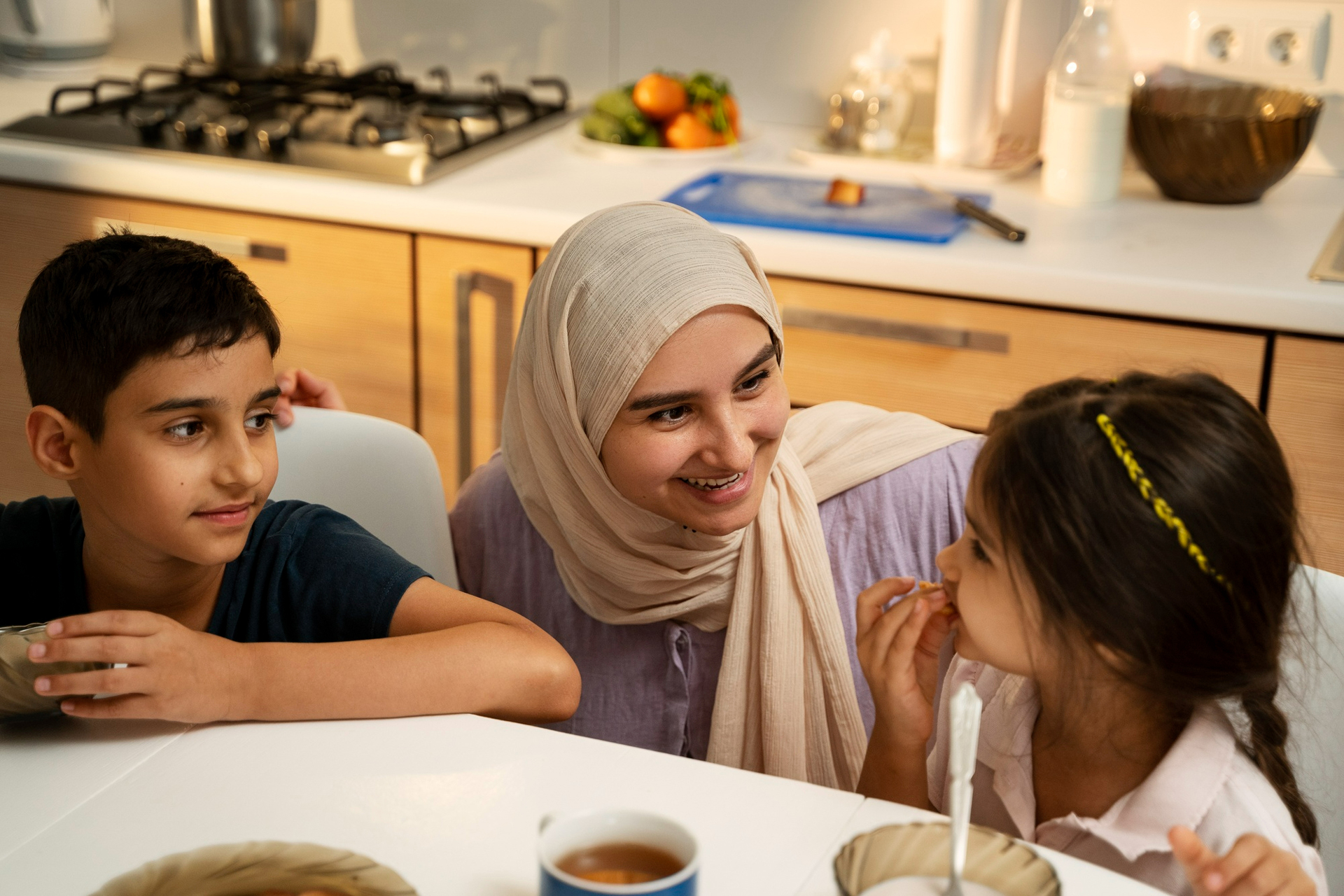
One of the most powerful benefits of Eid is the family environment it creates. Extended family gatherings expose children to rich Arabic communication throughout the day.
Children hear different accents, speaking styles, tones, and expressions from parents, grandparents, cousins, and family friends. This diversity helps improve listening comprehension and builds familiarity with natural spoken Arabic.
Even children who rarely speak Arabic at home often become more confident during Eid gatherings because social interaction encourages communication in a natural way.
Language is not learned only through instruction but through immersion and meaningful interaction. Eid naturally provides both.
Instead of memorizing words, children experience Arabic in real contexts such as greetings, hospitality, storytelling, humor, and emotional expression. Simple moments become powerful learning experiences, such as greeting guests in Arabic, thanking relatives for gifts, helping prepare food while hearing Arabic vocabulary, listening to family stories, and participating in games and traditions.
These experiences strengthen comprehension and make language more natural. For parents using online Arabic lessons for kids, these real-life experiences reinforce everything children learn in structured lessons, making progress faster and more meaningful.
The Educational Power of Eid Greetings
Eid greetings are one of the simplest yet most powerful tools for children’s Arabic development. They introduce vocabulary, reinforce pronunciation, and teach cultural values such as respect, kindness, gratitude, and generosity.
Common greetings include expressions like Eid Mubarak, Kul aam wa antum بخير, and Taqabbal Allah منا ومنكم. Because these greetings are repeated frequently throughout Eid, children naturally absorb them without pressure.
Repetition in meaningful situations makes memorization effortless. Parents can turn this into a fun learning activity by practicing greetings before Eid, writing them in cards, or encouraging children to use them with family members. These small actions help children understand that Arabic is useful, expressive, and part of real communication.
Beyond memorization, greetings also help children understand social etiquette. They learn when to speak, how to respond politely, and how language reflects respect and connection between people. These are essential communication skills that go far beyond vocabulary learning.
Storytelling During Eid Builds Language and Imagination
Storytelling is deeply rooted in Arab culture, and Eid gatherings often bring families together to share memories, traditions, and experiences.
These storytelling moments are extremely valuable for language development because they expose children to natural sentence flow, expressive vocabulary, and emotional language. Listening to stories helps children improve vocabulary, comprehension, memory, and listening skills. They also learn how sentences connect, how events unfold, and how language expresses emotion.
When children hear stories during Eid, they are not just learning words. They are learning rhythm, tone, expression, and structure of real communication. This is something that cannot be fully taught through memorization alone.
Parents can extend this benefit by reading Arabic stories during Eid evenings or encouraging children to retell what they heard in their own words. Even simple retelling builds confidence, sequencing skills, and expressive ability.
At KALIMA, storytelling is a key part of Arabic lessons for kids because it transforms language learning into imagination-driven engagement. Children remember stories far more easily than isolated vocabulary because stories create emotional and cognitive connections at the same time.
Songs and Nasheeds Improve Memory and Pronunciation
Music plays a powerful role in language learning. During Eid, children often hear Arabic songs and nasheeds that they naturally begin singing along to.
Music helps children improve pronunciation, strengthen listening skills, and memorize vocabulary more easily because rhythm and melody support memory retention.
When a child sings Arabic lyrics, they are practicing pronunciation without pressure. They repeat sounds naturally and learn intonation patterns that are difficult to teach through explanation alone.
Educational research shows that music activates multiple areas of the brain at the same time, which strengthens learning pathways and improves long-term recall.
Parents can enhance this experience by introducing simple Arabic songs related to Eid, family values, or joy, and encouraging children to sing, clap, or move along with them.
At KALIMA, movement and music-based learning are used because children learn best when they are actively involved rather than passively listening.
Cooking and Daily Activities Build Practical Vocabulary
Eid celebrations often include cooking traditional meals and desserts, which creates natural opportunities for language learning.
Children can learn Arabic words related to ingredients, actions, colors, tools, and measurements while participating in cooking activities.
Words such as sugar, flour, milk, mix, wash, hot, and cold become meaningful when connected to real actions rather than memorized lists.
This type of learning is especially effective because children connect language with sensory experience. They see it, touch it, and use it in real time.
Even simple tasks like setting the table or helping serve food become opportunities to practice Arabic vocabulary naturally. These everyday interactions build functional communication skills that children can use outside of celebration settings.
Social Interaction Builds Communication Confidence
Eid is filled with social interaction, which makes it an ideal environment for practicing communication skills in Arabic.
Children learn how to greet people politely, express gratitude, respond to compliments, ask questions, and participate in conversations.
These social skills are essential for real fluency because language is ultimately about communication and connection.
Children who may be shy in formal learning environments often become more confident during celebrations because the atmosphere is relaxed and supportive. There is no pressure of performance, only natural interaction.
This is why interactive approaches in learn arabic online for kids’ programs are so effective when combined with real-life experiences. Language becomes something lived rather than studied.
Repetition Makes Learning Stick Naturally
One of the most powerful learning mechanisms during Eid is repetition.
Children hear the same greetings, phrases, and expressions multiple times throughout the celebration, which strengthens memory naturally.
Repetition is most effective when it happens in meaningful contexts rather than forced drills. During Eid, repetition occurs through greetings, conversations, prayers, songs, and family interactions.
This natural repetition ensures that children remember vocabulary long after the celebration ends. A child hearing “Eid Mubarak” repeatedly throughout the day will likely retain it effortlessly and use it with confidence later.
Cultural Identity and Language Connection
Language is closely tied to identity. Arabic is not only a communication tool but also a connection to culture, traditions, values, and family heritage.
Eid helps children strengthen this connection by experiencing traditions firsthand. They see how Arabic is used in expressions of love, generosity, humor, and spirituality.
These experiences build pride in their heritage and strengthen motivation to continue learning the language. Children begin to see Arabic not as a difficult subject, but as part of who they are.
This emotional connection is one of the strongest drivers of long-term language retention.
Supporting Arabic Learning Beyond Eid
While Eid provides powerful exposure, consistent learning throughout the year is essential for long-term fluency.
Parents can support learning through simple daily habits such as speaking Arabic phrases at home, reading stories, watching cartoons, singing songs, and practicing greetings regularly.
Consistency is more important than intensity. Even small daily exposure builds strong long-term results.
Language learning is a gradual process. Children need repetition over time, not pressure in short bursts.
Final Thoughts
Eid creates one of the most natural and emotionally powerful environments for children to connect with Arabic. Through greetings, storytelling, music, cooking, and family interaction, language becomes alive, meaningful, and enjoyable.
Children learn best when they feel emotionally connected and socially engaged. Eid naturally provides these conditions, making it an ideal opportunity to strengthen Arabic language development.
At KALIMA, we believe learning should always feel engaging, interactive, and joyful. Through personalized one-on-one online lessons, children build confidence, communication skills, and a real connection with Arabic in a supportive environment. Reach out to us to book your child’s Arabic classes and give them a learning experience that feels natural, meaningful, and fun.
Contact Us: 📞 +961 81 701 455 📧 info@kalima-lessons.com
Recommended Read: The Power of Consistency: A 15-Minute Daily Arabic Routine