5 Signs Your Child Needs Extra Support in Arabic Reading
Struggling to read confidently? These subtle signs may indicate your child needs additional guidance before the next school year. Arabic reading is one of the most demanding skills a young learner has to build, and unlike some of the more visible signs of difficulty in other subjects, struggles with Arabic reading often hide in plain sight. A child can appear to be following along in class, can recite familiar passages from memory, and can even bring home decent grades, while quietly avoiding the deeper work of decoding unfamiliar text. Parents are usually the first to notice that something feels off, even before they can put their finger on exactly what it is.
This article walks through five signs that often point to a child needing more support with Arabic reading, along with an explanation of why these signs appear and what can be done about them. None of these signs are cause for panic. Reading difficulty in Arabic is extremely common, given how different the script and structure are from many other languages a child might be learning at the same time. What matters is recognizing the signs early enough to act, ideally well before the pressure of a new school year adds extra stress on top of an already shaky foundation. Many parents only realize, looking back, that the signs were present for months before anyone named them clearly, which is exactly why a closer look at each one is so worthwhile.
Why Arabic Reading Is Uniquely Challenging
Before looking at the signs themselves, it helps to understand why Arabic reading trips up so many children who otherwise seem to be doing fine. Arabic is written from right to left, uses a connected script where the shape of a letter changes depending on its position in a word, and relies heavily on short vowel marks that are often omitted entirely in regular texts once a child moves past beginner-level books. A child can master the alphabet and still struggle significantly once those vowel marks disappear, because suddenly they are expected to recognize words by pattern and context rather than by sounding out every symbol on the page.
On top of this, many children are learning Arabic reading at the same time they are learning to read in another language at school, and the two systems work in almost opposite directions, both literally and structurally. This dual demand on a developing brain means that some confusion and slow progress is completely normal in the early stages. The signs below become meaningful not because a child experiences them occasionally, but because they persist, show up consistently across different texts, and do not seem to improve with the usual amount of practice.
Sign One: Avoiding Reading Aloud Whenever Possible
One of the clearest signs that a child needs additional guidance is a strong, consistent avoidance of reading aloud. Most children go through a phase of feeling a little shy about reading in front of others, but there is a meaningful difference between ordinary shyness and active avoidance rooted in fear of getting stuck or making mistakes.
Watch for patterns such as a child suddenly developing a stomachache right before reading time, offering to do almost any other task instead of picking up a book, or becoming unusually quiet and tense the moment a passage of Arabic text is placed in front of them. Children who feel confident in their reading ability are typically willing, even eager, to read aloud, because the activity does not carry the same emotional weight. When reading aloud consistently triggers anxiety, it is often a sign that the underlying decoding skills have not solidified enough to make the activity feel safe.
This avoidance can be especially easy to miss at home if a child has learned to redirect attention cleverly, perhaps by claiming to already know a story by heart and reciting it from memory rather than actually reading the words on the page. While impressive on the surface, this kind of memorization can actually mask a real gap in reading ability for months or even years if no one looks closely enough.
Sign Two: Confusing Letters That Look Similar
The Arabic alphabet includes several groups of letters that share a nearly identical base shape, distinguished only by the number and placement of small dots. Letters in these groups are particularly easy for children to confuse, especially in the early stages of learning Arabic reading, and some confusion here is expected for a while.
The sign worth paying attention to is persistent confusion that continues well past the point where a child has otherwise moved on to reading longer words and short sentences. If a child regularly swaps these letters while reading, consistently mispronouncing words because of the mix-up, and does not seem to notice or self-correct even when gently prompted, this points to a gap in the visual discrimination skills that good Arabic reading depends on. Because these letter groups appear constantly throughout any Arabic text, ongoing confusion here tends to compound, slowing down comprehension of entire sentences rather than just isolated words.
It is also worth watching for similar confusion with letters that look alike when written in their different positional forms, since a single Arabic letter can look noticeably different depending on whether it appears at the beginning, middle, or end of a word. A child who reads a letter correctly at the start of a word but struggles to recognize that same letter in its connected middle form may be dealing with a related but slightly different gap in visual pattern recognition.
Sign Three: Reading That Is Slow, Effortful, and Choppy
Fluency is one of the clearest windows into a child’s underlying reading ability, even when accuracy looks reasonably good on the surface. A child who can eventually read most words correctly but does so word by word, in a slow, halting rhythm with frequent pauses, is using up so much mental effort on the basic act of decoding that very little capacity remains for understanding what the words actually mean.
This sign is sometimes overlooked because parents naturally feel relieved when a child manages to get through a page without major errors, focusing on accuracy rather than pace. But fluent reading should feel close to natural speech, with words grouped together in meaningful phrases and a rhythm that mirrors how the sentence would sound if spoken aloud. When reading instead comes out flat, mechanical, and disconnected, broken into individual words rather than flowing phrases, it is a strong signal that decoding has not yet become automatic and that significant mental energy is being spent simply identifying each word rather than absorbing the meaning of the sentence as a whole.
Over time, this kind of effortful reading tends to make children avoid books altogether, since the experience of reading remains exhausting and unrewarding even as text gets slightly longer in each school year. The earlier this pattern is addressed, the less likely it becomes that a child develops a lasting aversion to reading simply because it has never felt easy.
Sign Four: Reading Words Correctly Without Understanding Them
A particularly tricky sign to catch is the gap between decoding and comprehension. Some children become quite skilled at sounding out Arabic words accurately, pronouncing each one correctly, while having little to no understanding of what those words actually mean once strung together into a sentence. From the outside, this can look like strong reading ability, especially to a parent listening for correct pronunciation rather than checking comprehension directly.
The way to notice this sign is to ask simple questions immediately after a child finishes reading a short passage. If a child can read a paragraph fluently and accurately but cannot answer a basic question about what just happened in the story, who the characters were, or what a key word meant, this points toward a comprehension gap hiding behind otherwise solid decoding skills. This pattern often develops when early reading instruction focuses heavily on pronunciation and accuracy without enough parallel attention paid to meaning, vocabulary, and discussion.
Left unaddressed, this gap tends to become more pronounced as texts grow longer and more complex in later school years, since comprehension demands increase steadily while pure decoding eventually becomes automatic for most children regardless of their underlying understanding. Catching this sign early allows extra focus to shift toward meaning and discussion before the gap widens further.
Sign Five: Guessing Instead of Sounding Out Unfamiliar Words
The final sign relates to how a child handles new or unfamiliar words rather than ones already memorized from repeated exposure. Children who have not built strong decoding skills often develop a habit of guessing at unfamiliar words based on the first letter, the general shape of the word, or a picture nearby, rather than working through the word systematically from right to left.
This guessing strategy can be surprisingly effective at fooling adults in the short term, since a confident guess sometimes happens to be correct, especially with short, common words. The sign becomes clear when a child is asked to read an unfamiliar word slowly, sound by sound, and either resists doing so or struggles significantly once forced to slow down and actually decode rather than guess. Children relying heavily on guessing also tend to make wildly different errors on the same word across multiple readings, since the guess depends on context and mood rather than a stable decoding process.
This habit often develops as a coping mechanism in children who feel anxious about reading mistakes, since guessing offers a faster, less exposed alternative to the slower, more visible process of sounding a word out. Recognizing this pattern early matters because the longer guessing remains the default strategy, the harder it becomes to rebuild the habit of genuine, letter-by-letter decoding.
How These Signs Can Look Different Depending on Age
It is worth noting that these five signs do not always look identical from one age group to another, which is part of why they can be so easy to overlook. A five or six year old who is still building basic letter recognition will naturally show some hesitation and slow decoding simply because they are early in the process, and this should not be mistaken automatically for a deeper problem. The concerning version of these signs appears when a child continues to show them well past the point where classmates of a similar age and similar amount of exposure to Arabic have moved on to smoother, more confident reading.
For a slightly older child, around seven or eight, the signs often shift in character. Avoidance might look less like outright refusal and more like subtle stalling tactics, taking unusually long to find a book, asking repeated questions before starting, or rushing through a passage just to be done with it rather than actually engaging with the content. Letter confusion at this age tends to show up less with the alphabet itself and more with specific word families or grammatical patterns that rely on subtle differences in spelling. Comprehension gaps become easier to spot because the material itself grows more complex, often making the disconnect between fluent-sounding reading and actual understanding much more obvious to a parent who pauses to ask a few simple questions.
By the time a child reaches nine or ten, reading is expected to support learning across many subjects, not just Arabic class itself. At this stage, the five signs often surface indirectly, through complaints about other subjects that rely on reading instructions or passages in Arabic, frustration with homework that involves any kind of extended reading, or a noticeable preference for subjects that rely less on text. Recognizing that these signs can show up in disguised forms, depending on a child’s age and overall school experience, helps parents stay alert to patterns that might not look exactly like the examples described earlier, but stem from the very same underlying gaps.
What Parents Can Do While Arranging Extra Support
Recognizing these signs is only the first step, and many parents understandably wonder what they can do in the meantime, especially if extra support is still being arranged. A few simple adjustments at home can ease pressure on a struggling reader without requiring any specialized training.
Shortening reading sessions can make an immediate difference. A child who dreads reading because it has always meant a long, draining session often responds well to much shorter, more frequent practice instead, even five or ten minutes at a time, since this reduces the accumulated frustration that builds during longer sessions. Choosing material slightly below a child’s expected level for a while, rather than insisting on texts matched to their school grade, also allows confidence to rebuild on a foundation of consistent success rather than repeated struggle.
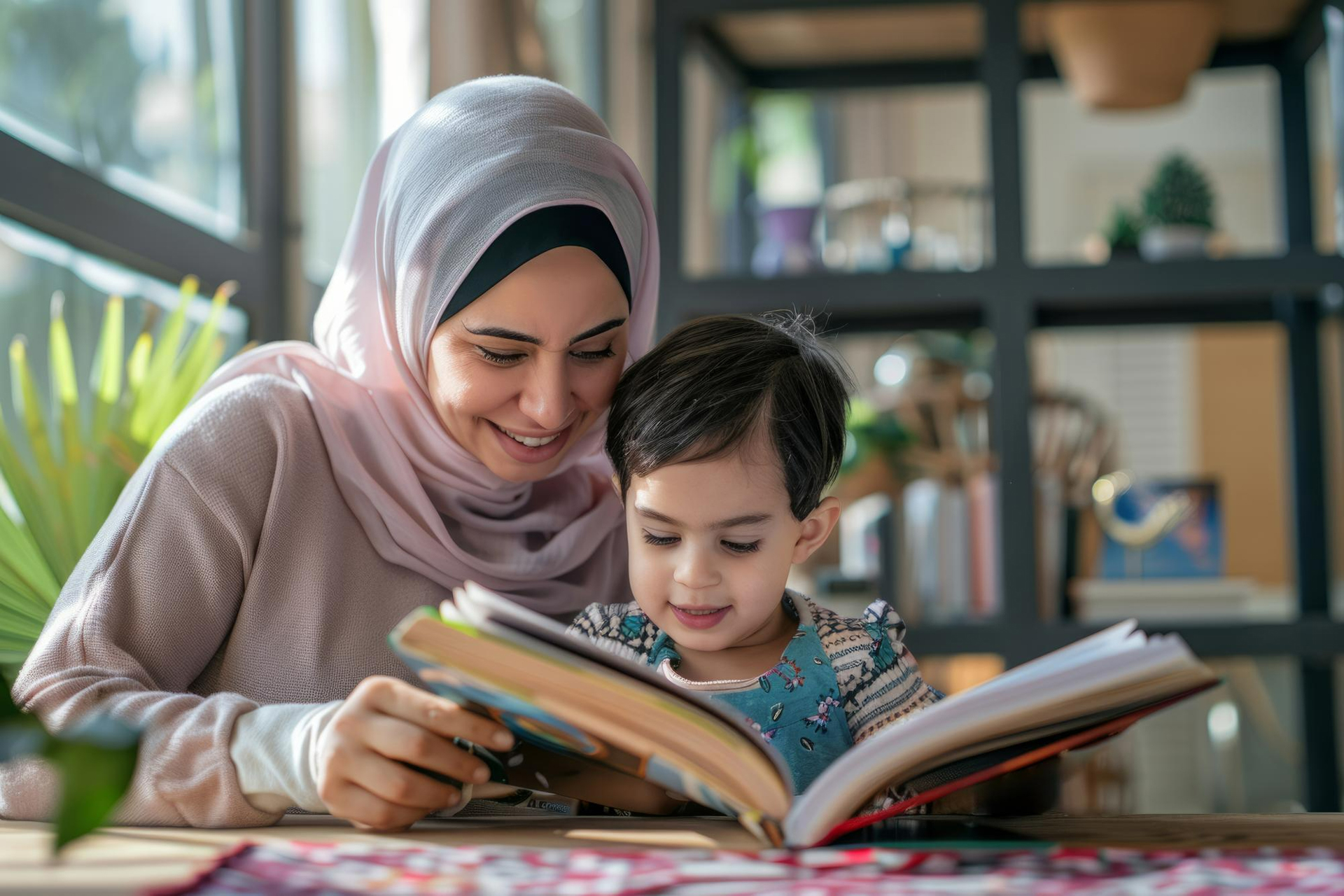
Reading together, rather than asking a child to read entirely alone, removes some of the exposure that makes reading aloud so intimidating for a struggling reader. Taking turns reading sentences, or simply reading alongside a child quietly while they follow along, lowers the stakes considerably while still providing valuable practice. Avoiding correction in the moment, and instead simply modeling the correct pronunciation naturally afterward, also helps preserve a child’s willingness to keep trying rather than shutting down out of fear of making another visible mistake.
These home adjustments are not a substitute for focused, professional support once one or more of the five signs becomes a consistent pattern, but they can meaningfully reduce daily stress around reading while a longer-term plan is being put in place.
Why Catching These Signs Early Makes Such a Difference
Reading skills in any language tend to build cumulatively, with each new skill resting on top of the ones learned before it. A child who enters a new school year with shaky foundations in Arabic reading is not simply starting from the same point as a confident reader; they are starting from behind, facing longer texts and higher expectations while still working through gaps that should have been addressed earlier. This is part of why the period before a new school year begins is such a valuable window for extra support, since it allows a child to strengthen weak areas without the added pressure of new homework and classroom expectations piling on at the same time.
Children are also remarkably perceptive about their own struggles, even when they cannot fully articulate them. A child who has spent a year or more feeling behind in Arabic reading often develops a quiet, internalized belief that they are simply not good at it, a belief that becomes increasingly difficult to undo the longer it persists. Addressing the signs above early protects not just reading skill itself, but a child’s broader confidence and willingness to keep trying.
How Personalized Support Closes These Gaps
The signs described above share a common thread: they are difficult to address through generic, one-size-fits-all instruction because each child’s specific mix of strengths and gaps is slightly different. One child might struggle primarily with letter confusion, while another reads accurately but lacks comprehension, and a third relies heavily on guessing out of anxiety rather than skill. Effective support needs to identify exactly which of these patterns is present for a particular child and target that pattern directly.
This is precisely where online Arabic lessons for kids, delivered through a one-on-one format, offer such a meaningful advantage over group-based instruction. A dedicated tutor working directly with a single child can observe these signs in real time, adjust pacing instantly, and design exercises that target the exact gap holding that child back, whether that means slowing down to rebuild letter recognition, adding deliberate comprehension checks after every short passage, or gently retraining a child away from guessing and toward genuine decoding.
At KALIMA, our Arabic lessons online are built around exactly this kind of personalized attention. Because every class is one-on-one, our tutors can spend the first sessions simply observing how a child reads, noticing which of these signs might be present, and shaping a learning plan around that specific child rather than a generic curriculum. Combined with our playful, game-based approach involving stories, drawing, and interactive activities, children rebuild their reading confidence in an environment that feels supportive rather than evaluative, which matters enormously for a skill so closely tied to a child’s sense of capability.
Moving Forward With Confidence
Noticing one or two of these signs occasionally is a normal part of any child’s reading journey and does not necessarily mean anything is seriously wrong. What matters is paying attention to patterns that persist over time, across different books and different moods, rather than reacting to a single difficult afternoon. If several of these signs feel familiar when you think about your own child’s reading habits, especially as a new school year approaches, it may be worth seeking out focused, personalized support sooner rather than later.
The earlier these gaps are addressed, the less time a child spends feeling behind, and the more naturally reading in Arabic can become something enjoyable rather than something to dread. With the right kind of attentive, individualized guidance, even children who have struggled for a long time can rebuild fluency, comprehension, and most importantly, the confidence to pick up an Arabic book without hesitation.
It is also worth remembering that progress in reading rarely arrives all at once. Most children move forward in small, sometimes invisible steps, a slightly faster pace one week, a slightly more relaxed posture while reading the next, long before the overall change becomes obvious during an ordinary evening at home. Parents who stay patient and consistent, while making sure the right kind of support is in place, tend to see these small steps add up into a genuinely confident reader sooner than they expect.
If any of these signs sound familiar, reach out to KALIMA to learn more about our one-on-one online Arabic classes and find the right fit for your child.
contact us on 📞 +961 81 701 455 📧 info@kalima-lessons.com
Recommended Read: How to Keep Arabic Alive at Home Without Homework