What If Arabic Learning Didn’t Feel Like Homework?
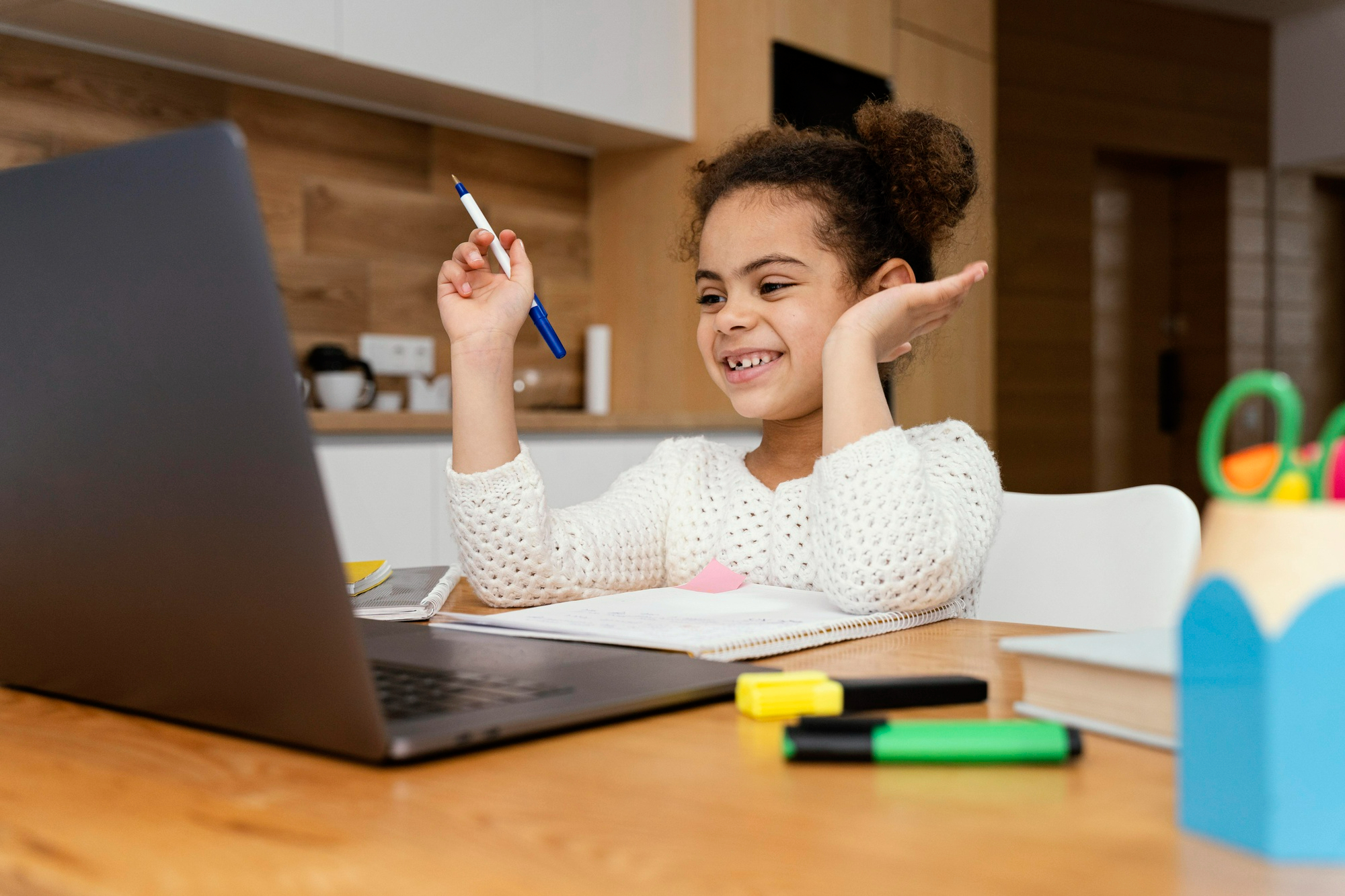
For many children, the word “study” immediately conjures up images of books, worksheets, red pens, and pressure. It is a word that often triggers a small sigh, a slouch in the shoulders, or a request to “do it later.” This is especially true when it comes to Arabic, a language that many children perceive as difficult, formal, and disconnected from the fun parts of their day. But what if learning Arabic did not have to feel like homework at all? What if, instead of worksheets and drills, it involved stories, games, songs, drawing, movement, and imagination? This is not a fantasy. It is entirely possible, and it is exactly the philosophy that guides everything we do at KALIMA.
Why Arabic Often Gets a Bad Reputation Among Children
Arabic is, without question, a rich and beautiful language, but it also comes with real challenges for young learners. Its script flows from right to left, its letters change shape depending on their position in a word, and its grammar includes structures that differ significantly from many other languages children may already speak. For a child encountering these features for the first time, especially through a traditional, textbook-heavy approach, it is easy to feel overwhelmed before any real connection to the language has had a chance to form.
Add to this the fact that Arabic lessons are sometimes taught with an emphasis on memorization and repetition rather than communication and play, and it becomes clear why so many children develop an early aversion to the subject. A child who associates Arabic with copying out letters over and over, reciting rules they do not fully understand, or being corrected repeatedly, is unlikely to develop genuine enthusiasm for the language, no matter how important that language may be to their family’s heritage or identity.
This matters deeply, because research on language acquisition consistently shows that emotional connection and enjoyment are some of the strongest predictors of long-term success and retention. A child who feels anxious or bored during language learning is far less likely to internalize vocabulary, grammar, or reading skills than a child who is genuinely engaged and having fun. In other words, the very approach that many families assume is the “serious” way to teach Arabic may actually be undermining the outcome they are hoping for.
The KALIMA Philosophy: Learning Through Joy
At KALIMA, everything we do is built on a simple but powerful belief: children learn best when they are enjoying themselves. With more than nine years of experience teaching Arabic to children, we have seen time and again that a playful, creative approach produces not only happier students but also stronger learners. Our target has always been to enhance a child’s interest in and love for their mother language, not simply to move them through a curriculum as efficiently as possible.
This is why our online Arabic lessons for kids are built around games, puppet shows, drawing, dancing, singing, and storytelling, rather than rigid worksheets and repetitive drills. A single lesson might involve acting out a short story using puppet characters who speak in Arabic, singing a song that reinforces new vocabulary, or drawing a picture and then describing it aloud in Arabic with the gentle guidance of a teacher. These activities are not simply entertainment layered on top of “real” learning. They are the learning itself, carefully designed to build vocabulary, reading skills, and writing skills in a way that feels natural and enjoyable rather than forced.
Stories as a Gateway to Language
Storytelling holds a particularly special place in how we approach Arabic learning at KALIMA, and for good reason. Stories are one of the oldest and most powerful tools for human learning. They engage a child’s imagination, create emotional investment in characters and outcomes, and provide rich, contextual exposure to new vocabulary and sentence structures in a way that isolated word lists simply cannot replicate.
When a child hears a story in Arabic about a clever fox, a lost puppy, or a mischievous little girl exploring a magical garden, they are not just absorbing new words. They are learning how those words function together, how sentences are built, how emotions are expressed, and how a narrative unfolds from beginning to end. Because the child is emotionally invested in what happens next, their attention naturally sustains itself far longer than it would during a traditional vocabulary drill.
Our teachers often use stories as the anchor for an entire lesson, weaving in related games, drawing activities, and discussion questions that all circle back to the same narrative. This creates a cohesive, memorable learning experience rather than a disconnected series of exercises, and children frequently ask to hear their favorite stories again and again, unknowingly reinforcing vocabulary and structures each time.
The Power of Puppet Shows
Puppet shows might sound like simple entertainment, but they are, in fact, a remarkably effective language teaching tool, particularly for younger children. When a child watches a teacher bring a puppet character to life, giving it a distinct voice, personality, and way of speaking Arabic, something shifts in how they engage with the language. The pressure of “performing” correctly disappears, because the focus is on the puppet’s story rather than on the child’s own performance.
Puppets also allow shy or hesitant children to participate more freely. A child who feels nervous speaking Arabic directly to a teacher may feel completely comfortable speaking through a puppet, using it as a kind of protective layer between themselves and the vulnerability of practicing a new language out loud. Over time, this playful practice builds genuine confidence, and children often find themselves speaking Arabic more naturally, without even realizing how much progress they have made.
Singing and Dancing: Learning With the Whole Body
Music and movement engage parts of the brain that traditional, seated learning simply does not reach. When children sing a song in Arabic, they are practicing pronunciation, rhythm, and vocabulary simultaneously, often without any conscious effort at all. The repetitive, melodic structure of songs makes new words stick in a way that reading them silently on a page rarely achieves.
Dancing and movement-based activities add another layer of engagement, particularly for children who struggle to sit still for long periods. Associating certain Arabic words or phrases with specific movements, such as jumping when hearing a word for “jump” or spinning when hearing a word for “turn,” creates a physical, embodied memory of the language that tends to be remarkably durable. This kind of multisensory learning is especially valuable for younger children, whose brains are naturally wired to learn through movement and play rather than through passive listening or reading.
Drawing as a Tool for Vocabulary and Expression
Drawing might seem like a simple, low-key activity, but it plays a meaningful role in how children absorb and express new vocabulary in Arabic. When a child draws a picture of a house, a family, or an animal, and then labels or describes that picture in Arabic with a teacher’s guidance, they are building a direct, personal connection between the language and their own creative expression.
This process also gives children a sense of ownership over their learning. A drawing they created themselves feels far more meaningful than a generic worksheet image, and children are often eager to describe their own artwork in as much detail as possible, naturally reaching for new vocabulary and more complex sentence structures in the process. Our teachers frequently use drawing as both a warm-up activity to start a lesson and a wrap-up activity to reinforce what was learned, giving children a creative outlet at both ends of the session.
One-on-One Attention Makes the Difference
None of this playful approach would be as effective without the personalized attention that comes from one-on-one lessons. Every child learns differently, has different interests, and progresses at a different pace, and a group setting or a generic curriculum often cannot accommodate these differences. At KALIMA, our Arabic lessons online for kids are tailored specifically to each individual student, taking into account their age, personality, current level, and even their particular interests, whether that is dinosaurs, princesses, soccer, or outer space.
This personalization means a teacher can weave a child’s favorite topics directly into stories, games, and songs, making the learning experience feel uniquely relevant to that particular child rather than generic or one-size-fits-all. It also means our teachers can adjust pacing in real time, slowing down when a concept needs more reinforcement or moving more quickly when a child is ready for new challenges, all without the pressure of keeping an entire classroom on the same page.
Building the Three Pillars: Language, Reading, and Writing Through Play
While our approach is playful, it is also deeply structured around building genuine competency across the three core areas that matter most in Arabic learning: the language itself, reading, and writing. The difference is not in what is being taught, but in how it is being taught.
Spoken language development happens naturally through conversation embedded in games and stories, where children practice forming sentences, asking questions, and expressing ideas in a low-pressure, communicative context. Reading skills are introduced gradually through engaging, age-appropriate stories and interactive activities that make the connection between letters and sounds feel like solving an enjoyable puzzle rather than memorizing an abstract system. Writing practice is folded into drawing and creative activities so that forming letters and words feels like an extension of a child’s natural desire to create and express rather than a tedious handwriting exercise.
Because these three pillars are woven together through play rather than taught as separate, disconnected subjects, children build a more integrated, intuitive understanding of the language as a whole.
Meeting Every Child Where They Are
No two children come to Arabic learning from the same starting point. Some grow up hearing Arabic spoken regularly at home but struggle with reading and writing. Others may have very limited exposure to the language at all, perhaps hearing it only from grandparents or during family visits, and are essentially starting from scratch. Still others may already read and write reasonably well but lack confidence speaking conversationally. A one size fits all worksheet cannot account for these very different starting points, but a thoughtful, playful, one on one approach can.
At KALIMA, the first step with any new student is understanding exactly where they are, what excites them, and what feels challenging so that the games, stories, and activities chosen for their lessons genuinely meet their needs rather than following a rigid, generic script. This individualized starting point is part of what allows learning to feel like play rather than pressure, because nothing about the lesson feels mismatched to the child sitting in front of the teacher.
Rethinking Mistakes as Part of the Adventure
One of the quiet but powerful differences in a play-based approach to Arabic learning is how mistakes are treated. In a traditional, worksheet-heavy environment, a mistake is often marked with a red pen, corrected, and moved past quickly, sometimes leaving a child with the impression that getting things wrong is something to be embarrassed about or avoided at all costs. This fear of making mistakes can quietly shut down a child’s willingness to speak up, guess, or experiment with new vocabulary, which are all essential parts of genuinely learning a language.
When learning happens through games and stories, mistakes take on a completely different character. If a child mispronounces a word while singing a song or gets a bit of a story mixed up while acting it out with a puppet, the moment simply becomes part of the fun rather than a failure to be corrected. Our teachers at KALIMA are trained to respond to mistakes with warmth and gentle redirection rather than correction that feels like judgment, often turning an error into an opportunity for a laugh or a playful do-over. Over time, this builds a kind of psychological safety that allows children to take risks with the language, to guess at a new word, to try out a sentence they are not entirely sure of, because they know that even if it is not quite right, the experience will remain enjoyable and encouraging.
This matters enormously for long-term progress. Children who are afraid of making mistakes tend to become quiet, hesitant learners who stick only to what they already know is correct, which severely limits how quickly they can grow. Children who feel safe making mistakes tend to experiment more, speak more, and as a result, learn considerably faster, even though the process looks less “serious” from the outside.
Consistency Without Pressure
A common concern among parents considering a playful approach to language learning is whether it can truly deliver consistent, measurable progress or whether it is simply enjoyable without producing real results. This is a fair question, and the honest answer is that play and consistency are not opposites. In fact, they work best together.
At KALIMA, every lesson, no matter how playful it appears on the surface, is built around clear learning objectives tied to your child’s current level and our broader curriculum covering the Arabic language, reading, and writing. Our teachers track each child’s progress carefully, noting which vocabulary has been mastered, which reading skills are developing, and where additional reinforcement is needed. The games, songs, and stories are simply the vehicle through which this structured progress happens, not a replacement for it.
Because sessions are one-on-one and consistent, typically happening on a regular weekly schedule, children build steady momentum over time. A teacher who sees the same child week after week can track subtle shifts in comprehension and confidence that would be far harder to notice in a larger group setting and can adjust the pace and content of future lessons accordingly. The result is a learning journey that feels light and enjoyable in the moment, while still building toward real, lasting competency over months and years.
What Parents Notice When Learning Feels Like Play
Parents who move their children from a traditional, worksheet-based approach to a playful, engaging method often notice a striking shift, not just in their child’s Arabic skills, but in their child’s attitude toward learning in general. Children who once resisted Arabic lessons, dragging their feet or complaining before a session, often begin asking when their next lesson is scheduled. Some children even start incorporating Arabic words and phrases into their play outside of lessons entirely, singing songs to themselves or acting out stories with their toys, a clear sign that the language has moved from an external obligation to an internalized, genuinely enjoyed part of their life.
This shift matters enormously, because it reflects exactly what we hope to achieve at KALIMA: not just competency in Arabic, but a lasting, positive relationship with the language that will carry a child forward for years to come. Skills learned under pressure and anxiety tend to fade quickly once that pressure is removed, but skills built through joy and genuine engagement tend to stick, precisely because the child wants to keep using and exploring them.
Bringing the Family Into the Fun
Another advantage of a playful approach to Arabic learning is how naturally it extends beyond the lesson itself. Songs learned during a session often get hummed at home. Stories introduced by a teacher sometimes get retold to siblings or grandparents at dinner. Drawings made during a lesson frequently end up proudly displayed on the refrigerator. In this way, the joy of learning Arabic ripples outward into family life in ways that a traditional worksheet, tucked away in a folder and forgotten, rarely does.
Parents can amplify this effect by showing genuine interest in what their child is learning, asking them to teach a new word or sing a new song, or asking them to retell a story from their lesson in their own words. This kind of engagement signals to children that their progress matters and is celebrated, which reinforces motivation far more effectively than any external reward system could. Even grandparents or relatives who speak Arabic fluently often find themselves delighted and moved when a child eagerly shows off a new phrase or song, creating a beautiful intergenerational connection around the language.
Building an Identity Around the Language
Perhaps the deepest goal behind our playful approach at KALIMA is helping children build a positive sense of identity around their connection to Arabic. Language is never just a set of vocabulary and grammar rules. It is tied to culture, family history, and a sense of belonging. When children learn Arabic through fear, pressure, and repetition, they risk associating not just the language but their broader cultural identity with something stressful or burdensome.
When children instead learn Arabic through joy, laughter, and genuine connection with a caring teacher, that same language becomes tied to positive memories and a sense of pride. They begin to see Arabic not as a subject imposed on them, but as a meaningful part of who they are, something they choose to embrace rather than something they are required to endure. This shift, from obligation to identity, from pressure to pride, is at the very heart of KALIMA’s mission, and it is why we remain so committed to a teaching approach built entirely around play, creativity, and joy.
A Different Kind of “Homework”
None of this means that structure or consistency disappears. Children still build real, measurable skills in reading, writing, and speaking Arabic. But the experience of getting there looks fundamentally different from traditional homework. Instead of a child sitting alone with a workbook, feeling stuck and frustrated, they are engaged in a lively, interactive session with a caring teacher who adjusts to their needs, celebrates their progress, and makes the entire experience feel like something to look forward to rather than something to get through.
And ultimately, that is what every parent hopes for when they set out to teach their child Arabic in the first place: not just fluency, but a genuine, lifelong appreciation for their mother language that will stay with them long after the lessons themselves have ended.
This is the heart of what we believe at KALIMA. Learning Arabic does not have to feel like homework. It can feel like an adventure, a game, a story come to life. And when it feels that way, children do not just learn the language. They fall in love with it.
Give your child the gift of loving their mother tongue. At KALIMA, we make learning Arabic fun, creative, and stress-free through games, puppet shows, storytelling, drawing, dancing, and singing, with one-on-one lessons tailored to your child’s needs. Ready to get started? Reach out to us and let’s begin this journey together.
Contact us on 📞 +961 81 701 455 📧 info@kalima-lessons.com
Recommended Read: After School Overload: How to Balance Homework, Play, Activities and Arabic Lessons