Modern vs. Traditional: The Shift to Interactive Online Lessons
The landscape of education has undergone a tectonic shift over the last decade, and perhaps nowhere is this more evident than in the realm of language acquisition. For generations, the standard for learning Arabic was defined by a specific image: a child sitting at a wooden desk, eyes glued to a black and white textbook, repeating long lists of vocabulary words after an instructor. This “repeat after me” method, while familiar, often left children feeling disconnected from their mother tongue. As we navigate the educational world of 2026, it has become increasingly clear that the old ways are no longer sufficient to keep a child engaged, especially when the goal is to cultivate a genuine love for the language.
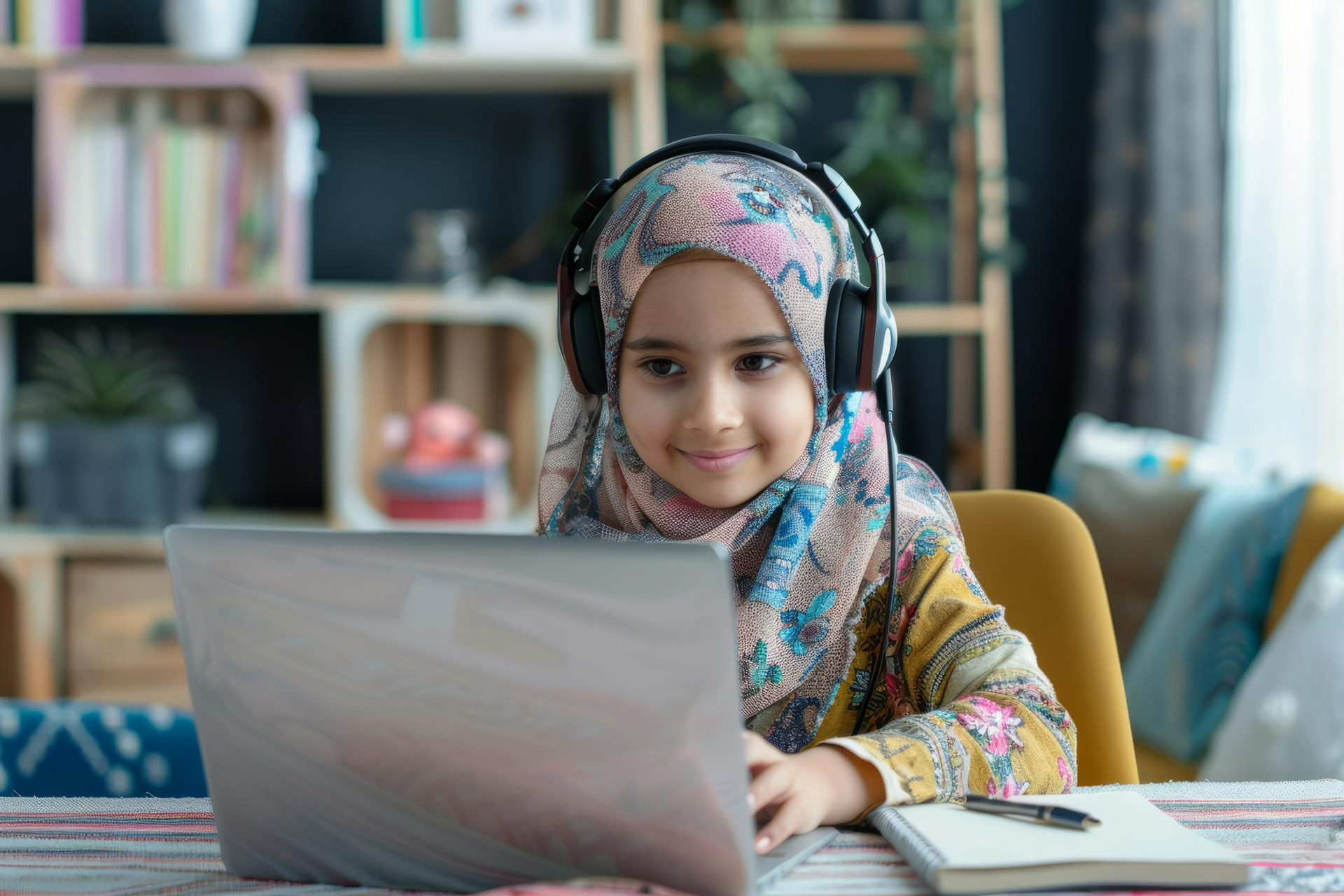
At Kalima, we have spent more than 9 years of experience in teaching Arabic observing this evolution. We have seen how the traditional, rigid approach can inadvertently build a wall between a child and their heritage. To dismantle that wall, we have embraced a new era of learning—one where Arabic lessons online are not just a substitute for a physical classroom, but a superior, interactive environment that speaks the language of a modern child. The question for parents today is no longer “Can my child learn Arabic online?” but rather “How can interactive learning transform my child’s relationship with their culture?”
The Fading Echo of “Repeat After Me”
The traditional method of language learning relied heavily on rote memorization. This was a system built for a different age, focusing on the tough and rigid mechanics of the language rather than its living, breathing spirit. In a typical traditional setting, the student is a passive recipient of information. They listen, they repeat, and they memorize. While this might lead to the short term retention of words, it rarely leads to long term fluency or, more importantly, emotional engagement.
Children in 2026 are digital natives. They are used to environments that respond to them, challenge them, and entertain them. When these children are faced with a “repeat after me” curriculum, their brains often switch to autopilot. The cognitive engagement required is minimal, and the spark of curiosity is quickly extinguished. This is why the traditional method is fading. It fails to compete with the dynamic world the child lives in. To keep a child engaged today, we must move from passive observation to active participation.
The psychology of “active learning” suggests that a child retains 90% of what they do, compared to only 10% of what they read or hear. By replacing the “repeat after me” echo with a “do with me” interaction, we are fundamentally changing how the brain stores Arabic. We are moving the language from the auditory loop—where it is easily forgotten—to the motor and emotional centers of the brain, where it becomes a permanent part of the child’s identity.
What Actually Keeps a Child Engaged in 2026?
Engagement is the holy grail of modern education. But what does it actually look like in a virtual classroom? It isn’t just about flashy graphics or high speed internet. Real engagement is rooted in psychological connection and sensory stimulation. At Kalima, we have identified several key drivers that keep a child coming back to their Arabic lessons with excitement.
First and foremost is the Happy and Fun factor. If a child associates Arabic with joy, their brain becomes a sponge for information. Second is personalization. Our one on one online Arabic classes are tailored and chosen upon every student’s need because every child has a different “hook.” For one child, it might be the magic of stories; for another, it might be the competitive nature of a game. By identifying these hooks, we transform the lesson from a chore into a highlight of their day.
In 2026, engagement also requires a “humanized” digital experience. We are moving away from robotic, automated apps that treat children like data points. Instead, we use technology to bridge the distance between teacher and student, creating a warm, supportive environment where the child feels seen and heard. This social connection is the “secret sauce” of successful online learning.
The Interactive Revolution: A Multi-Sensory Approach
The shift to interactive learning is not just a change in technology; it is a change in philosophy. At Kalima, we have categorized this approach through our core pillars, each represented by a specific color and energy. These categories are the building blocks of our curriculum and are designed to engage every facet of a child’s personality.
The Logic of Grammar Fun (Blue)
In a traditional setting, grammar is often the most dreaded part of the lesson. It is seen as a mountain of rules and exceptions. In the modern interactive model, we use Grammar Fun, represented by the color Blue for logic and clarity. We treat grammar like a puzzle. Instead of memorizing conjugation tables, children use interactive digital tools to “build” sentences. They see the logic behind how words connect, making complex structures feel easy to understand. When a child solves the “puzzle” of a sentence, they feel a sense of mastery that rote memorization can never provide. This clarity removes the fear of making mistakes, as the “logic” of the language becomes a friendly guide rather than a strict judge.
The Energy of Play Time (Orange)
Orange is a friendly, energetic color that stimulates the brain for problem solving. Interactive online lessons allow us to integrate sophisticated games that test vocabulary and comprehension in real time. Whether it is a digital scavenger hunt or a fast paced matching game, Play Time ensures that the child is constantly thinking and reacting. This high energy environment mirrors the way children naturally play, making the transition to learning seamless. By turning lessons into challenges, we tap into the child’s natural competitive spirit and desire for achievement.
The Magic of the Story Corner (Purple)
Storytelling has always been a cornerstone of Arabic culture, but in 2026, we have the tools to make those stories interactive. In our Story Corner, represented by the color Purple for magic and mystery, children don’t just listen to a tale—they help shape it. They might choose which path a character takes or help a protagonist find a hidden object by using Arabic keywords. This immersion into a world of imagination makes the language feel like a key that unlocks a magical universe. Stories provide the “context” that traditional lessons lacked, showing children how the language is used to express complex emotions and adventures.
The Professionalism of Kalima Blogs (Teal)
Our Kalima Blogs, coded in Teal for trust and educational resources, serve as the backbone for our parents. We provide the research and the “why” behind our methods. In the modern era, parents are partners in the educational journey. By providing professional, trustworthy tips, we ensure that the interactive learning experience extends beyond the digital classroom and into the home. This transparency builds a community of trust around the child’s progress.
The Festive Spirit of Special Days (Gold)
Gold represents the brightness and importance of holidays. In a traditional setting, culture is often taught as a separate subject. In our interactive model, culture is woven into every lesson. We celebrate Special Days with festive digital backgrounds, traditional songs, and specific vocabulary related to celebrations. This makes the language feel like a celebration of the child’s identity. When a child associates Arabic with festive joy, they develop a “cultural pride” that motivates them to keep learning.
The Compassion of Puppet Chat (Pink)
One of the most innovative shifts in modern Arabic lessons online is the use of digital or physical puppets to build a friendly bond. Puppet Chat, represented by Pink for playfulness and compassion, allows children to practice speaking in a low pressure environment. A child who might be too shy to correct a teacher will happily correct a puppet who “forgets” the word for apple. This builds compassion and confidence, two essential ingredients for language acquisition. Puppets become the child’s “learning peer,” making the educational journey feel less lonely.
The Creativity of the Art Lab (Red)
Red is a high action color that sparks passion. In our Art Lab, we use interactive whiteboards and digital drawing tools to explore the beauty of Arabic script. The tough and rigid perception of Arabic writing is transformed into a creative act. Children can trace letters with vibrant colors, add digital “stickers” to their work, and see their art come to life. This passion for making art translates directly into a passion for the language. Writing becomes an expression of the self rather than a repetitive chore.
The Joy of Yalla Sing (Yellow)
Yellow represents sunshine and happiness. Music is a powerful mnemonic device. In our Yalla Sing sessions, we use rhythmic songs and dances to teach everything from the alphabet to complex verbs. The physical act of singing and moving helps the child internalize the sounds of the language. In 2026, we use native quality audio and catchy beats that resonate with a modern child’s musical taste. Music bypasses the “logical” brain and goes straight to the memory, making vocabulary recall effortless.
The Growth of the Letter Hunt (Green)
Green symbolizes new beginnings and growth. The Letter Hunt is our way of introducing literacy. Instead of staring at a static alphabet chart, children go on a virtual quest to find letters hidden within interactive scenes. This turns the first steps of reading and writing into a rewarding adventure. As they find each letter, they see it grow and connect with others to form words. This gamified approach removes the intimidation factor of the Arabic script.
The Grounding of the Sensory Box (Brown)
Even in a digital world, tactile play is essential. Our Sensory Box, represented by Brown, an organic, earthy tone, encourages parents to use natural materials like sand or wood at home while the teacher guides the child through the screen. This blend of the digital and the physical ensures that the child is grounded and attentive to the words. It reminds them that the language they are learning online is the same language used to describe the world they touch and feel.
Tailoring the Experience: One on One vs. The Crowd
One of the biggest failures of the traditional classroom was its “one size fits all” approach. In a room of twenty students, the teacher must move at a set pace. Some children are left behind, while others become bored. The modern shift toward online learning has solved this by prioritizing one on one online Arabic classes.
At Kalima, we believe that the best way to learn Arabic is to be attentive to the words and to have fun. This is only possible when the teacher can focus entirely on one child. If a student is having a particularly energetic day, the teacher can pivot to Yalla Sing or Play Time. If the child is in a quiet, imaginative mood, they can spend more time in the Story Corner. This level of tailoring ensures that the child never feels overwhelmed or under challenged.
Furthermore, one on one sessions allow for “micro-adjustments” in pronunciation and grammar that are impossible in a group setting. The teacher can hear every subtle sound, providing immediate, gentle feedback that builds the child’s accuracy without damaging their confidence. The lesson moves at the child’s speed, respecting their unique learning style and psychological needs.
The Psychological Advantage of Interactive Learning
Why does the interactive model work so much better than the traditional one? The answer lies in how the human brain processes information. When a child is bored or stressed, their “affective filter” goes up, blocking the acquisition of new language. The traditional “repeat after me” method often triggered this filter by being repetitive and high pressure.
Interactive learning, conversely, lowers the affective filter. When a child is playing a game, singing a song, or interacting with a puppet, they are in a state of “flow.” They aren’t worrying about making a mistake; they are simply enjoying the experience. In this state, the brain is far more likely to move information from short term memory to long term acquisition.
We are also leveraging the “Self-Generation Effect.” When a child actively participates in “creating” a sentence or “finding” a letter, they are generating the information themselves. Research shows that self-generated information is remembered far more vividly than information that is simply presented. We aren’t just teaching them to “know” Arabic; we are teaching them to “own” Arabic.
The Role of the Teacher in 2026
In the traditional model, the teacher was the ultimate authority, the source of all knowledge. In the modern interactive model, the teacher is a facilitator and a co-explorer. At Kalima, our instructors are not just fluent in Arabic; they are experts in engagement. They know how to use the digital tools at their disposal to create a “humanized” experience.
Even though the lesson is happening through a screen, the connection is real. The teacher uses the child’s name, remembers their favorite colors, and reacts with genuine excitement to their progress. This “humanized” professional communication is what separates Kalima from automated apps or rigid online courses. We believe that technology should serve the human connection, not replace it. Our teachers are mentors who guide children through the “intriguing yet interesting” world of the Arabic language with patience and joy.
Arabic: From “Tough and Rigid” to “Intriguing yet Interesting”
Arabic is often described as a difficult language, but at Kalima, we prefer the term “intriguing.” It is a language of deep roots, poetic structures, and a rich history. The traditional method focused on the difficulty, emphasizing the “tough” grammar and the “rigid” script. The interactive method focuses on the intrigue, revealing the language’s beauty through play and discovery.
By using digital storytelling, color coded grammar, and creative art projects, we show the child the beauty within the complexity. We turn the “tough” parts into a series of rewarding challenges. When a child realizes they can navigate a virtual Letter Hunt or sing a complex song in Arabic, their self-esteem grows. They begin to see themselves as capable and bilingual. This confidence is the greatest gift we can give a student. It transforms Arabic from a “school subject” into a “superpower.”
Why 9 Years of Experience Matters
In the world of online education, experience is a critical differentiator. We have spent nearly a decade refining our approach, testing different interactive tools, and listening to the feedback of our students and parents. We have seen the transition from simple video calls to the sophisticated, multi sensory platforms we use today.
Our 9 years of experience in teaching Arabic has taught us that while the technology changes, the core needs of a child remain the same: they want to be seen, they want to be heard, and they want to have fun. Our methodology is built on these timeless truths, enhanced by the best that 2026 technology has to offer. We have perfected the balance between academic rigor and creative play. We know what works, what doesn’t, and most importantly, why.
The Three Pillars of Success: Language, Reading, Writing
Regardless of the method used, the goal remains the same: mastery of the three main courses.
- The Arabic Language Itself: This is the foundation—the ability to hear, understand, and speak. Interactive learning makes this a living experience through Puppet Chat and Yalla Sing. We focus on natural conversation and everyday vocabulary that the child can use immediately.
- Arabic Reading: We move from the Letter Hunt to the Story Corner, helping the child decode the script and find meaning in the text. We use interactive books that allow children to click on words to hear their pronunciation, bridging the gap between sight and sound.
- Arabic Writing: Through the Art Lab, we turn the act of writing into a creative expression, moving from digital tracing to confident composition. We teach children that their handwriting is a form of art, encouraging pride in their penmanship.
By addressing these three pillars through an interactive lens, we ensure a holistic development that prepares the child for a lifetime of bilingualism. We aren’t just teaching a language; we are opening doors to new cultures, new friends, and new opportunities.
The Future is Collaborative and Creative
Looking ahead, the shift toward interactive learning will only deepen. We are exploring new ways to integrate collaborative projects where students can interact with peers in a safe, moderated digital environment. Imagine an “Art Lab” where two children in different parts of the world collaborate on a digital Arabic mural. This is the future of Kalima—a global community of young Arabic speakers connected by joy and technology.
The “repeat after me” era served its purpose in its time, but it is no longer the standard for excellence. In 2026, we have the opportunity to give our children something better. We can give them an Arabic learning experience that is as dynamic, creative, and joyful as they are. We can move away from the tough and rigid and embrace the happy and fun.
Conclusion: Embracing the Future of Arabic Learning
The shift to interactive online lessons is not just about staying modern; it is about honoring the language by teaching it in a way that respects the child’s natural curiosity. At Kalima, we are proud to be at the forefront of this revolution. We believe that every child has the potential to love Arabic, provided they are given the right tools and the right environment.
By adopting a creative, interesting and fun approach, we increase the love for this language. We learn through playing games, puppet shows, drawing, dancing, singing, and creating stories. We invite you to join us on this journey of discovery and to see for yourself how the right approach can change everything. Let’s make Arabic the highlight of your child’s day.
At Kalima, the best way to learn Arabic is to be attentive to the words and to have fun; our One-on-one online Arabic classes are tailored and chosen upon every student’s need. With us your child gets to take Arabic courses in the most happy and fun way, where he/she enjoys knowing more about this intriguing yet interesting language. The three main courses we focus on to Learn Arabic are the Arabic Language itself, Arabic Reading and Arabic Writing.
WhatsApp Support 📞 +961 81 701 455
📧 info@kalima-lessons.com
Recommended Reads: 5 Fun Ways to Teach Arabic at Home This Season