From Screen to Speech: How We Turn Online Lessons into Confident Arabic Conversations at Home
For the modern parent raising bilingual children, the dream is universal: you envision your child navigating their heritage with the same ease, humor, and emotional depth as they do their school language. You imagine them joking with grandparents, understanding the poetry of their roots, and carrying the mother tongue into their own adulthood. Yet, for many living abroad or in multicultural hubs, the reality is a persistent struggle.
Many families find themselves trapped in a one way street of communication. You speak to your children in Arabic, but the response comes back in English or French. This phenomenon, known as passive bilingualism, is one of the most common hurdles in language acquisition. It is the point where many parents lose hope, assuming their child simply isn’t a language person.
At KALIMA, we have spent over nine years proving that this is a myth. After nearly a decade of analyzing student behavior and pedagogical outcomes, our conclusion is clear: the problem isn’t the child, and it isn’t the language; it’s the delivery. Traditionally, Arabic is taught as a dead subject: rigid, academic, and heavy. But Arabic is a living, breathing soul. To bring it into the home, we must first breathe life into the classroom.
Part I: The Rigid Language Myth – Deconstructing the Barrier
Why Children Resist Traditional Arabic Learning
Arabic is frequently labeled as tough or impossible. When we look at traditional curriculum structures, it’s easy to see why. Most schools lead with complex grammar (Nahw) and deep morphology (Sarf), focusing on the mechanics of the engine before the child even knows how to drive the car.
For a young mind, a language built primarily on rules feels like a cage. When an educator prioritizes the correct conjugation of a high level verb over a child’s ability to express basic emotions like I am happy or Look at this, the language becomes a burden. Language is, at its core, a tool for social connection and survival. If that tool is too heavy or feels rusty, a child will instinctively set it down in favor of a lighter, more modern tool usually the dominant language of their school environment.
At KALIMA, we move Arabic out of the museum case and put it directly into the child’s hands. We shift the focus from academic perfection to emotional expression.
The Psychology of the Affective Filter
To understand why some children shut down during Arabic lessons, we must look at the Affective Filter Hypothesis, developed by linguist Stephen Krashen. This concept suggests that an invisible psychological barrier rises when a student experiences boredom, anxiety, or a lack of self confidence.
When this filter is up, the brain’s ability to process and produce speech is physically inhibited. It is similar to the fight or flight response; if a child feels pressured or bored, their brain enters a defensive state. A tough or rigid Arabic lesson triggers this filter, making learning nearly impossible regardless of how many hours are spent studying. Our mission is to lower this filter completely. We replace anxiety with intrigue and replace drilling with discovery.
The Evolutionary Need for Connection
Human beings are wired for connection. For a child, if a language does not facilitate immediate connection with their peers or parents, the brain categorizes it as a secondary or even a tertiary priority. By making Arabic the language of play, we trick the brain into categorized it as a primary survival and social tool. This is the secret to long term retention.
Part II: The Neuroscience of Play Based Learning
Why do we insist on puppet shows, dancing, and games? It isn’t just to keep the children entertained; it is because play is the highest form of research.
Dopamine, Cortisol, and Memory Retention
When a child engages in a puppet show or a creative game, their brain releases dopamine. This neurotransmitter is the reward chemical, and it is intrinsically linked to memory and sustained focus. In a traditional, high pressure classroom, the brain may instead produce cortisol, the stress hormone. Cortisol actually inhibits the prefrontal cortex the exact part of the brain responsible for language processing.
By adopting a creative approach, KALIMA ensures the child’s brain remains in a state of neuroplasticity. We create multiple sensory anchors for every new word. For instance, when a child learns the word Tuffaha (apple), they don’t just memorize a translation. They associate the word with the red crayon they used to draw it, the song they sang about it, and the physical crunching motion they made during a game. This creates a robust, multi dimensional memory that is far harder to forget than a word on a flashcard.
The Motor Cortex and Total Physical Response (TPR)
One of the cornerstones of the KALIMA method is Total Physical Response (TPR). This is a language teaching strategy that coordinates speech with physical movement. If we are teaching the word Qafaz (jump), we don’t just write the letters on a screen we jump together!
By linking a physical action to a linguistic unit, the memory is stored in the motor cortex. This is the same part of the brain that remembers how to ride a bike or swim. This type of memory is procedural and often becomes spontaneous. This is why a KALIMA student might be playing in a park weeks later, jump over a puddle, and instinctively shout Qafaztu! without having to translate the thought from English first.
The Bilateral Power of Music and Rhythm
Arabic is an inherently rhythmic language, built on a system of roots that follow melodic patterns. We utilize singing to help children master the more difficult phonemes such as the ‘Ayn (ع) or the Hha (ح) without the stress of repetitive, dry drilling.
Music is a whole brain activity. While the left hemisphere processes the structure, syntax, and vocabulary, the right hemisphere handles the melody, rhythm, and emotional tone. This dual track learning makes the language sticky. Long after the lesson ends, the melody remains in the child’s head, bringing the Arabic vocabulary along with it for the ride.
Visual Synesthesia in Learning
By turning letters into characters through drawing, we utilize a form of educational synesthesia. When a child sees the letter Jeem and sees a camel with a belly, the visual and linguistic centers of the brain fire simultaneously. This cross firing strengthens the neural pathway, making letter recognition nearly instantaneous after just a few sessions.
Part III: The Three Pillars of the KALIMA Curriculum
We believe a holistic education must balance three distinct but interconnected areas of study.
1. The Arabic Language (The Spoken Soul)
This is where the journey begins. Before a child can be expected to read a classical text, they must find their own voice. We focus on oral communication helping the child express their needs, their jokes, and their stories. This pillar is about building the emotional bridge to the mother tongue. We emphasize dialect awareness alongside formal structures, ensuring the child can actually speak to their family members.
2. Arabic Reading (The Gateway to Heritage)
Reading can be daunting because Arabic script changes shape based on a letter’s position. We demystify this by turning the alphabet into a cast of characters. A Ba isn’t just a letter; it’s a boat with a treasure underneath. By personifying the script, we move reading from a task to a puzzle that children are excited to solve. We move from letter recognition to the ability to digest the stories of our shared history, focusing on comprehension rather than just decoding sounds.
3. Arabic Writing (The Art of Self Expression)
Writing is the ultimate form of ownership. When a child can write their own thoughts in Arabic, the language is no longer something being given to them; it is something they own. We focus on developing fine motor skills through digital drawing and creative calligraphy, ensuring that writing feels like an art project rather than a chore. We encourage children to write their own short stories, even if they only know a few words, to foster a sense of creative agency.
Part IV: Age Specific Strategies – The Developmental Journey
Every age group requires a different psychological approach to stay engaged with a non dominant language.
The Sponging Phase (Ages 3 to 6)
At this stage, the attentive fun is at its peak. A child’s ear is incredibly sensitive to new sounds. We don’t focus on the technicalities of grammar; we focus on ear training. Through puppet shows and repetitive nursery rhymes, we ensure the child develops a native like accent and a positive emotional association with the sound of Arabic. At this age, the goal is purely phonetic familiarity and joy.
The Analytic Phase (Ages 7 to 10)
As children enter primary school age, their brains begin to look for patterns. This is where the intrigue factor deepens. We introduce storytelling that requires logic and beginning reading skills. Our one on one sessions are vital here, as they allow us to move at the child’s specific pace, building confidence before moving to the next level of complexity. We start to introduce basic sentence structures through interactive games that reward correct usage.
The Identity Phase (Ages 11+)
For pre teens and teenagers, Arabic must feel cool and relevant to their lives. They are developing their sense of self, and if Arabic feels like a babyish activity or a boring school chore, they will reject it. We bridge the gap between Academic Arabic and the Mother Language by using interactive games, modern cultural topics, and creative stories that match their maturity levels. We might discuss technology, sports, or travel in Arabic to prove the language’s modern utility.
Part V: Detailed Parent Guide – Supporting the Journey at Home
While our instructors provide the spark, the parents provide the fuel. To successfully raise a bilingual child, a partnership between the home and the digital classroom is essential.
1. Establishing the Language Island
You don’t have to speak Arabic 24/7 to be successful. In fact, for busy parents, that can be overwhelming. Instead, create a Language Island a specific time or place where only Arabic is used. This could be the dinner table, the drive to school, or a reading chair in the evening. By creating these boundaries, the child learns to switch gears mentally. It becomes a dedicated space for cultural connection.
2. The Art of Life Narration
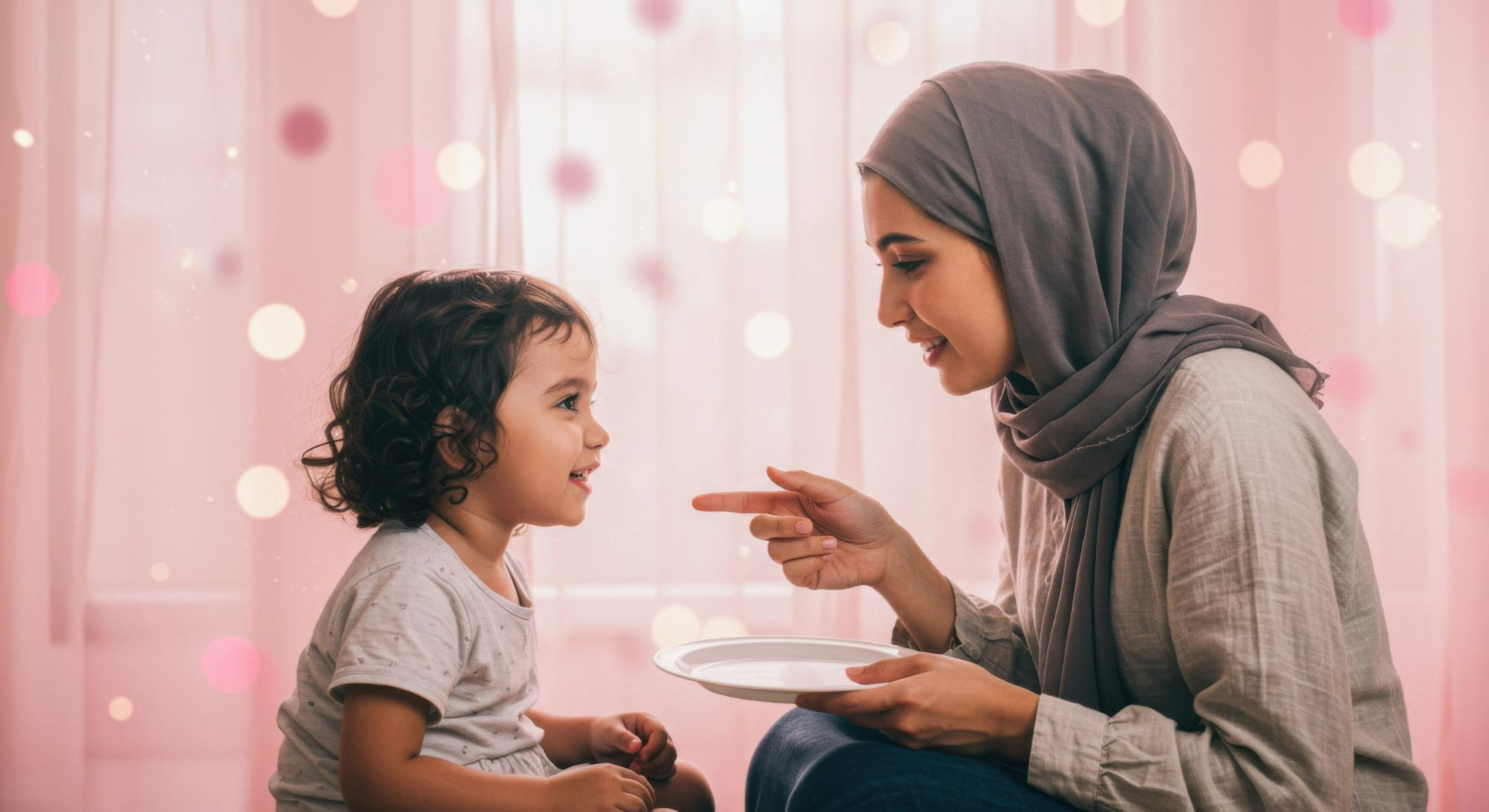
Children learn through context, not just translation. Try to narrate your actions as you do them. Instead of quizzing your child (How do you say water?), simply state what you are doing: Ana ashrab al-ma’ (I am drinking the water). This provides the child with a continuous stream of comprehensible input without the pressure of a test. It mimics the way they learned their first language.
3. Understanding and Respecting the Silent Period
Many children go through a silent period where they understand everything but refuse to speak. This is a normal stage of language acquisition. They are building their internal library and testing their own understanding. Do not pressure them to speak; instead, continue to provide fun, engaging Arabic content. When their confidence tank is full, the words will overflow naturally.
4. Positive Reinforcement and Error Correction
This is our most important rule for parents: Never correct grammar mid sentence. If your child makes the effort to use an Arabic word but gets the gender or tense wrong, do not stop them to explain the rule. Simply smile, validate their thought, and repeat the sentence back to them correctly. For example, if a child says: I go-ed to the Hadiqa (park)! The parent should respond: Yes! You went to the Hadiqa! Was it fun? This reinforces the vocabulary and provides a correct model without damaging their fragile speaking confidence.
5. Games to Play at Home
Parents can reinforce KALIMA lessons with simple five minute games:
- Arabic Simon Says: Use the TPR method to practice verbs like stand, sit, and jump.
- The Mystery Box: Place objects in a box and have the child name them in Arabic as they pull them out.
- Color Hunt: Ask the child to find something of a specific color (Ahmar, Azraq) around the house.
Part VI: Why Online One on One Learning is the Future
Many parents wonder if an online platform can truly replace a physical classroom. In our experience, the digital environment actually offers unique advantages for language learning:
- The Safe Space Factor: When a child learns from their own bedroom or living room, they are in their safe space. They are more likely to take risks and be silly with a puppet when they don’t feel the eyes of twenty other peers on them. This significantly reduces the affective filter.
- Individual Tailoring: In a group class, the teacher must move at the average speed. At KALIMA, if your child is a visual artist, we spend more time on drawing based learning. If they are a budding musician, we lead with song. This personalization ensures that the child never feels bad at Arabic.
- Seamless Integration: By bringing Arabic into the home via the screen, the language stops being a school subject and becomes a home activity. This makes the transition to using Arabic in daily family life much smoother.
- Global Access to Expertise: No matter where you are in the world, your child can access teachers with over nine years of specific experience in playful Arabic pedagogy.
Part VII: Real Stories of Transformation
Over nine years, we have seen the KALIMA Method change the trajectory of families across the globe.
The Case of Layla (The Shy Listener) Layla was a 7 year old living in London. She understood her parents perfectly but would only reply in English. She was terrified of making a mistake. Through our puppet led sessions, she found a mask to hide behind. She wasn’t speaking; her puppet friend was! Within months, the puppet’s confidence became Layla’s confidence. Today, she narrates her day in Arabic without a second thought, and her relationship with her grandparents has flourished.
The Case of Omar (The Reluctant Student) Omar, age 10, told his parents that Arabic is boring and old. He wanted to talk about football and video games. We pivoted his entire curriculum to focus on his passions. We taught him how to give a match report in Arabic and how to describe his favorite game characters. Once he realized Arabic could be used to talk about things he actually liked, his resistance vanished. He now views Arabic as a secret code for his favorite hobbies.
The Case of Sarah (The New Reader) Sarah struggled with the visual complexity of the script. Traditional methods left her feeling frustrated. At KALIMA, we turned the alphabet into a story. Once the letters became friends with names and personalities, her reading speed tripled in six weeks. She no longer fears the page; she sees it as a story waiting to be told.
Part VIII: The Cultural Importance of the Mother Tongue
Arabic is not just a collection of words; it is a repository of history. It is one of the oldest living languages, carrying the weight of centuries of science, philosophy, and art. When a child learns Arabic, they are gaining access to:
- Generational Wisdom: The ability to speak with elders and understand the nuances of family history.
- Cognitive Flexibility: Bilingualism has been shown to improve problem solving skills and delay cognitive decline later in life.
- Cultural Identity: A sense of belonging that transcends borders.
Part IX: The KALIMA Legacy – More Than Just Words
Arabic is an intriguing, complex, and beautiful language. At KALIMA, we aren’t just teaching a vocabulary list; we are preserving a heritage. We believe that every child has the capacity to be bilingual. They just need an environment that values their interest, respects their pace, and celebrates their personality.
We are constantly evolving integrating digital escape rooms, new musical curriculums, and interactive storytelling to ensure that we remain the most happy and fun way to learn. Our goal is to foster a lifelong love for the language, ensuring it remains a part of the child’s identity forever.
The tough and rigid days of Arabic school are over. The era of creative, interactive, and joyful learning has begun. We invite you to stop the struggle and start the journey. Watch as your child transforms from a silent listener into a confident, proud Arabic speaker one puppet show, one dance, and one song at a time.
Take the Next Step
Is your child ready to discover the magic of their mother tongue? Join the hundreds of families who have found success through our tailored approach.
Contact Us Today: WhatsApp Support: 📞 +961 81 701 455 📧 info@kalima-lessons.com
Follow the Journey: Join our community of parents dedicated to creative education.
Recommended Reads: Why We Sing in Class: The Secret to How KALIMA Makes Arabic Stick